For plumbing contractors
Why a plumber's website is different from every other trade's
Plumbing work arrives as an emergency, usually at the worst hour, and the homeowner is standing in water while they search. The gap between finding you and calling you is under a minute — and whoever answers gets the job. A plumbing website isn't a brochure. It's the thirty seconds between a burst pipe and a booked call, and almost everything on it should serve that.
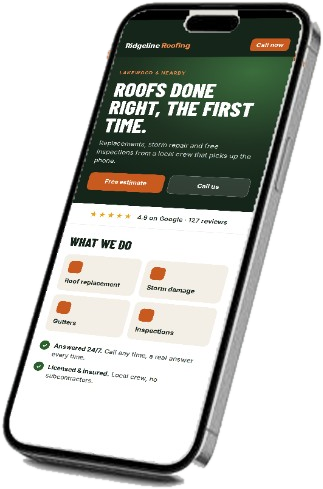
OutfitterAI's agent Emma builds your website live while you talk to her on the phone — no email loops, no drag-and-drop. Free to build, and yours to keep.
How the work actually arrives
Ask a plumber where their jobs come from and you get two different businesses in one truck.
The emergency half is a water heater at 11pm, a backed-up main on a Sunday, a slab leak on a holiday weekend. The customer has no loyalty and no shortlist. They search, they tap the first number, and if it rings out they tap the next one. That call is worth whatever the job is worth, and it is decided in seconds by whether someone picked up.
The planned half is a repipe, a bathroom rough-in, a water softener, a commercial maintenance contract. Different customer entirely — they compare, they read reviews, they want to see licensing and a real address before they let you cut into a wall.
Most plumbing websites are built for the second customer and lose the first one. The homepage opens with a hero photo and a paragraph about family values, and the phone number is a small link in a header that a wet thumb can't hit.
What decides the sale
For the emergency job: whoever answers. Not the nicest site, not the best price. There is no second place in a 2am search.
For the planned job: proof you're licensed, insured and permanent. Plumbing failures are expensive and hidden behind drywall. The homeowner is buying reassurance that if something goes wrong in eighteen months, you still exist and your insurance is real.
Those two jobs pull a website in opposite directions, which is why generic templates serve plumbers badly. You need both, visibly separated, from the first screen.
What a plumbing site needs that a template doesn't have
- Tap-to-call above the fold, on mobile, in the thumb zone. Not in a hamburger menu. Not a "contact us" link. The number, big, tappable, before any scrolling.
- Someone answering after hours. A 24/7 number that goes to voicemail is the same as no number — worse, because the customer thinks they reached you and stops looking. The Front Desk agent answers, qualifies the emergency and books it, at 2am, on Christmas.
- Emergency and scheduled work split from the first screen. Two different customers, two different paths. Nobody standing in water should have to read about your bathroom remodels first.
- License number and insurance stated plainly. Not buried in a footer. It's the single thing the planned-work customer is looking for.
- Service pages that match how people search. "Water heater replacement", "sewer line repair", "slab leak detection", "drain cleaning" — each its own page. Someone searching for a slab leak will not click a page called Services.
- A service-area map that's honest about the radius. Emergency jobs are won on drive time. Being clear about where you actually go stops you fielding calls you'd turn down anyway.
- Reviews visible on the page, not on a separate tab. The planned-work customer is deciding whether to trust you with their walls.
The part most plumbers never get to
Every item above is doable. Plumbers don't skip them because they're hard — they skip them because the plumbing business does not leave a free weekend, and a website is never the most urgent thing on a Sunday.
So it stays half-built, or it gets built once in 2019 and nobody touches it again. Meanwhile the emergency calls still come in at 11pm, and they go to whoever answers.
That's the actual argument for having this run for you rather than doing it yourself: not that you couldn't build it, but that the upkeep never ends and the phone never stops. The build is free and you keep the site. The $49/mo — or $294 for the year — is the answering, the Google Business Profile, the reviews and the updates that otherwise sit on your weekend.
Common questions from plumbers
Have Emma build your plumbing site on the phone
She'll set up the emergency path, your service pages and your license details while you talk to her. Free to build, yours to keep, live in about ten minutes.
Meet Emma → See pricingLast updated 29 August 2026.