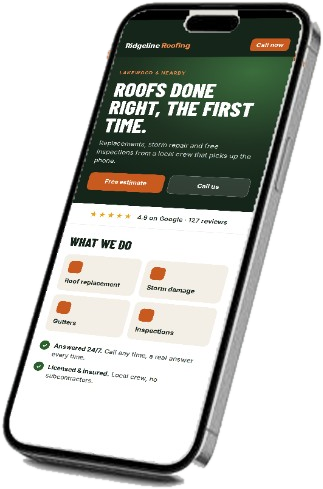
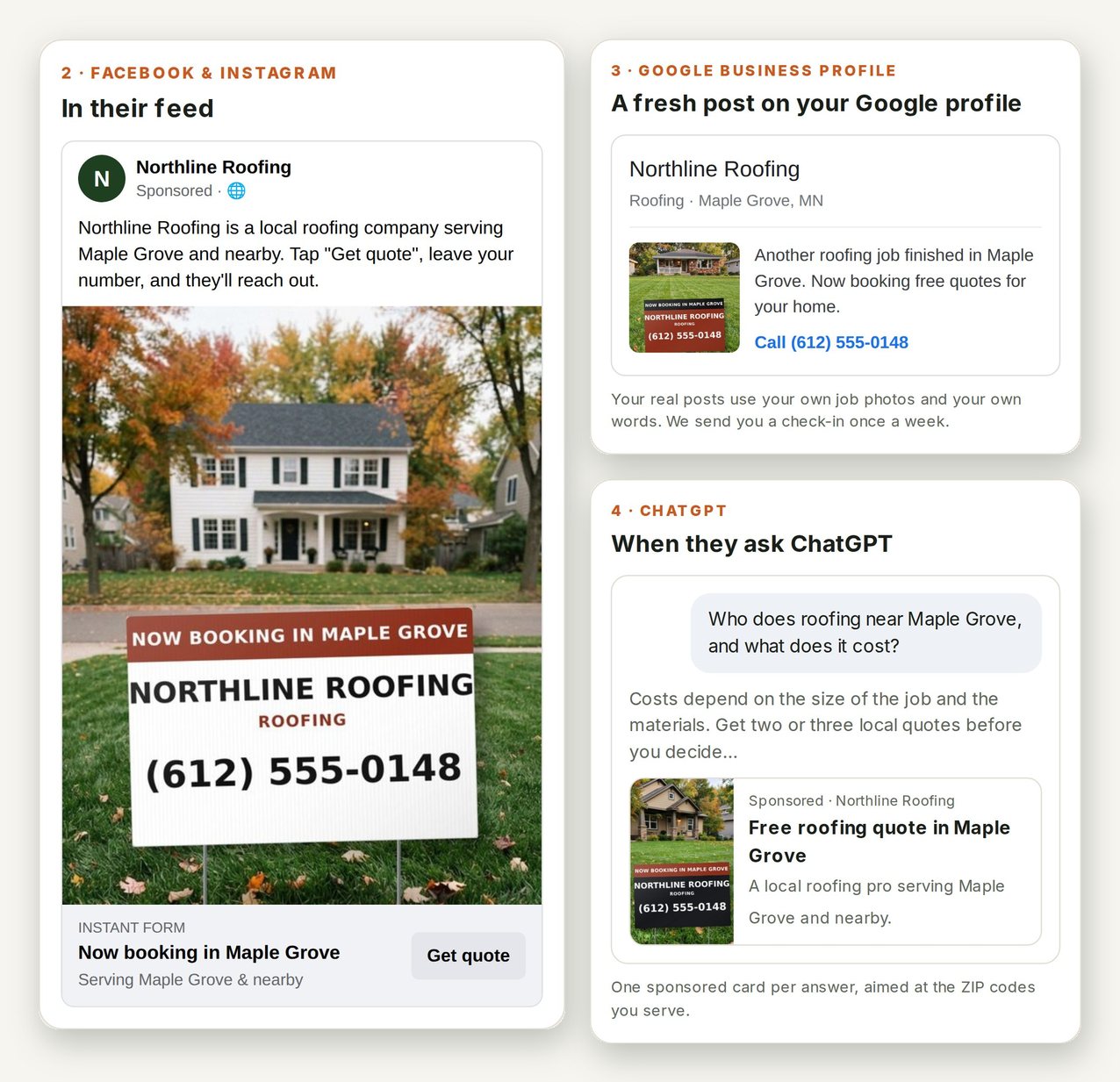
Pool calls stack up when you’re elbow-deep in a filter: a homeowner whose pool turned green over the weekend, a new buyer who needs an opening, a route customer whose pump is screaming. Outfitter gives your pool company a website built for pool service, an AI Front Desk that answers when you can’t, and ads and Google reviews run by Emma, your AI agent.
Call or text Emma the way you’d talk to an office manager. She does the rest.
Asks your questions, offers the homeowner a time and texts you the details to confirm.
Built for your trade in about five minutes, from what already wins work.
Six numbers worth knowing before you spend on another door hanger. Each one is linked to its source at the bottom of the page.
The industry’s biggest distributor books 61% of its sales in the second and third quarters. In northern markets that means a sprint of openings, a summer of weekly routes and a rush of closings. Emma lines up your ads and follow-ups with each stage.
Opening ads and reminders to last year’s customers go out early. Front Desk takes pool type, cover type and any winter damage, and pre-schedules openings for you to confirm. Every opening gets a weekly-service pitch.
Front Desk marks green-to-clean and equipment-down calls urgent. A review request goes out after service, and postcards go to the streets around your route stops to tighten your drive time.
Closing ads and reminders go out in late summer. Closings get pre-scheduled in batches by neighborhood, and equipment upgrade quotes go to customers with tired pumps and heaters.
Prepay offers for next year’s openings and weekly service. Hiring ads run now so new techs are trained before the first opening. In the Sun Belt, routes keep running and repair work fills the gaps.
A route in Phoenix or Tampa runs year-round with summer at its peak. A company in New Jersey or Michigan lives on openings and closings. Emma builds the calendar around your climate.
Homeowners who just found algae, a cloudy pool or a dead pump want help today, and they call down the list until someone answers. Front Desk answers while you’re on the route, asks your questions, pre-schedules a visit and texts you the details.
Example call. Front Desk follows the rules you give it.
Handing someone the gate code and your pool chemistry is a trust call. 97% of consumers read reviews of local businesses, and 45% have used ChatGPT or other AI tools to find one. Pool companies with recent reviews and a clear website get those calls.


Tell Emma about your route and services and your site is live in about 5 minutes. Change anything by texting her: “Add a fall closing special for October.”
Three changes pool service owners are dealing with this year. Explain them simply on the phone and on your site, and you look like the company that knows the business.
For context: pool and hot tub chemicals were about 14% of POOLCORP’s 2025 net sales. Insurers note that standard general liability usually excludes pollution claims, so ask about a pollution endorsement if you handle chemicals. [1] [3]
Most of the work lands in a few warm months, so the techs you hire in March decide how many pools you can take in June. PHTA’s Certified Pool & Spa Operator course is 16 hours, needs no prior experience and stays valid for 5 years. More than 700,000 people have taken it since 1973. [7] [3]

Call or text one number. Emma, your AI agent, runs your website, your ads, your phones and your hiring, set up for your pool service company.
Weekly service, openings, closings, green-to-clean and equipment repair laid out the way pool owners search.
Opening and closing ads timed to your climate, review requests after each job, postcards around your route stops.
Answers while you’re on the route, flags green pools and dead pumps urgent and pre-schedules visits.
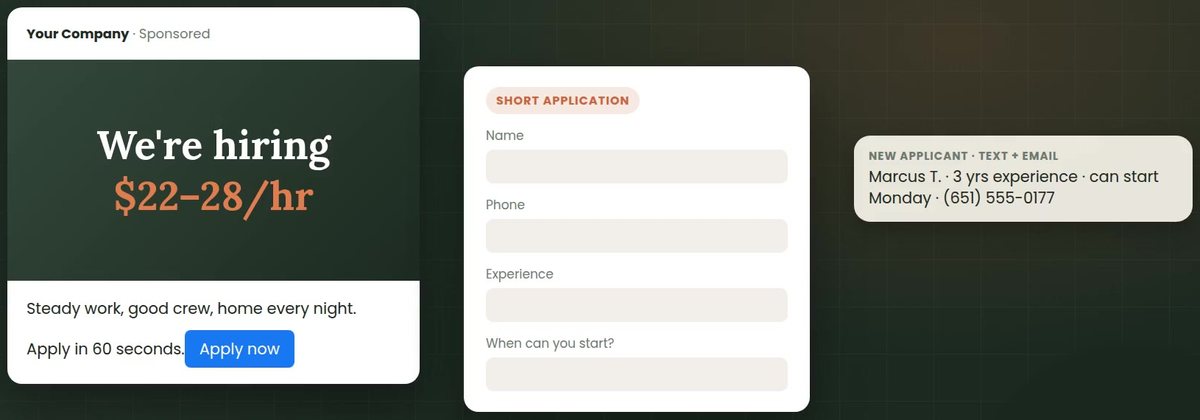
A pool tech job ad near your route, with every applicant sent to your phone.

Example conversation.
Practical advice for pool service owners on building a website that fills routes, marketing that keeps stops close together, and phone habits that turn green pools and openings into weekly customers. For solo route techs and multi-truck companies alike.
On this page: Website · Marketing & ads · Phone calls · FAQ · Sources
Give weekly service, openings and closings, green-to-clean, equipment repair, salt systems and acid washes their own pages. A homeowner with a swamp-green pool searches very differently from one comparing weekly plans. Separate pages let Google and AI tools send each one to the right answer.
List the towns and neighborhoods you serve and the days your trucks are there. It tells a prospect you’re already nearby and tells Google where you work. It also steers new sign-ups toward the areas where you already have stops, which keeps drive time down.
Say whether you skim, brush, vacuum, empty baskets, test water and clean filters, how often, and whether chemicals are in the price. Weekly service typically costs $80 to $150 a week [2], so show what the homeowner gets for it. Clear inclusions prevent the “you didn’t brush the steps” texts.
Say which techs hold PHTA’s Certified Pool & Spa Operator certification [7] and that you carry liability insurance. Standard liability policies usually exclude pollution claims, so if you carry a pollution endorsement for chemical handling [3], mention it. Pool owners hand you a gate code and their chemistry, so trust details matter.
Put a short request form for openings and closings on every page: pool type, cover type, any problems last season and preferred week. Pre-booking lets you plan crews by neighborhood. Outfitter sites include live AI appointment booking and email you each request.
Choosing who builds it? 18 website options compared, with first-year costs and who owns the site.
POOLCORP, the world’s largest pool supply distributor, books 61% of its sales in the second and third quarters [1]. That rush is why openings should be sold in late winter. Send reminders to last year’s customers in February and March, offer an early-booking price, and fill your opening calendar before the first warm weekend.
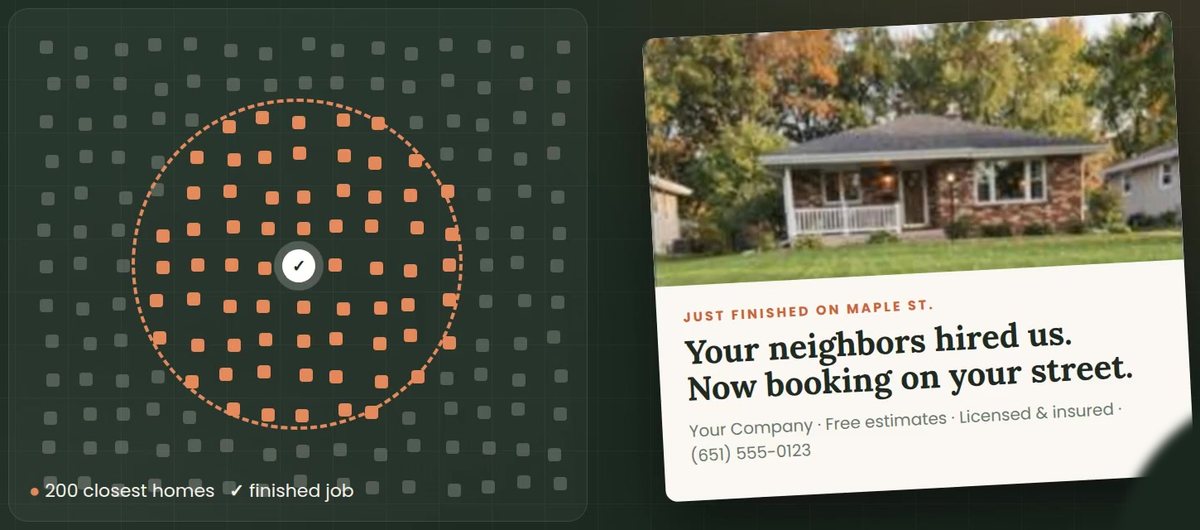
A new stop on a street you already service is worth more than one 20 minutes away. Mail postcards and hang door hangers around existing stops, and mention “we’re on your street every Thursday.” Tighter routes mean more stops per day without adding trucks.
Green pool cleanups get attention, so post before-and-after photos on Facebook, Instagram and your Google profile. After the pool clears, offer a first month of weekly service at a set price. A green pool usually means nobody was maintaining it, which makes weekly service the natural next step.
The best moments to ask are right after an opening, a green-to-clean or a repair that got the pump running again. Send a text with a direct link the same day. 74% of consumers look for reviews from the last three months [4], so keep asking all season, not just at the end.
Standard-size pool pump motors made since September 29, 2025 must have variable-speed control under DOE standards [5]. When you see an old single-speed pump on your route, quote the replacement before it fails, and explain the energy savings and quieter running. Planned replacements beat emergency calls in July.
POOLCORP reported product cost increases of about 2% to 3% in 2025, including tariffs [1], and duties on chlorinated isocyanurates from China stayed in place [6]. If chemicals are included in your weekly price, review that price every season. Track cost per new route customer for every ad and postcard you pay for.

Choosing where to spend? 26 marketing options compared, including which leads are shared with other contractors.
Opening season is when the most new customers call and when you’re busiest on the route. A missed call in April can be a lost opening and a lost season of weekly service. Set up after-hours coverage before the rush and return any missed call the same afternoon.
Ask in-ground or above-ground, rough gallons, chlorine or salt, the equipment they have, cover type, and how your tech gets in, including gates, codes and dogs. Ask for a photo of the equipment pad. Those answers decide the price, the chemicals and how long the first visit takes.
Ask whether they can see the floor, whether the pump is running and whether there’s an event coming up. Explain that a very green pool usually takes more than one visit to clear. Equipment failures with a dead pump in summer are urgent; a noisy heater in October can wait.
Give a range on the phone based on size, sanitizer and whether chemicals are included, then confirm the price on the first visit. Say up front how you handle extras like filter cleans, algae treatments and parts. Customers stick with a route company that never surprises them on the bill.
After an opening, text the homeowner the weekly-service offer while the water looks perfect. After every closing, offer to reserve next spring’s opening. Outfitter’s Front Desk pre-schedules openings and closings for you to confirm when you can’t answer, so those calls don’t wait until evening.
Choosing an answering service? What it should ask and which ones fit this trade, from live answering to AI.
Answer the urgent calls first: green pools, dead pumps and opening requests. Those callers often become weekly customers if you’re the one who shows up.
Then build density. Postcards to homes around your route stops, recent reviews and a website that lists your service days and towns help you add stops close to the ones you have. Your Outfitter site costs nothing to launch, and ads and answered calls are pay-as-you-go.
Front Desk is 35 cents a minute from your tokens, so $35 covers roughly 100 minutes of calls. Weekly pool service often runs $80 to $150 a week, so one caller who becomes a route customer pays for a long stretch of answering.
Yes. It asks your questions, like pool type, size, sanitizer, what the water looks like and whether the pump runs, then marks the call urgent and texts you. You decide when to go.
It never quotes a price or promises the pool will be swimmable by a certain day unless you told it to.
Yes. At the start of every call, Front Desk says it’s an AI assistant. It can use a natural voice or your own voice, cloned only from a recording you make. Callers always know who they’re talking to.
Yes. Your Google listing gets you on the map, but pool owners want to see whether you do weekly service, openings and closings, salt systems and repairs, and whether you cover their town. A website answers that, and AI tools use it when recommending companies. Outfitter has yours live in about 5 minutes.
Ask after openings, green-to-clean jobs and repairs, and ask route customers a few times a season. 74% of consumers want reviews from the last three months and 47% won’t use a business with fewer than 20. Emma handles the asking.
Grow in tight clusters. Every new stop near an existing one cuts drive time, so mail postcards to the streets around current customers and pitch weekly service on every opening and green-to-clean job. Emma can send 200 postcards around any address you pick.
Start early. Send opening reminders to last year’s customers and run local ads a few weeks before the first warm weekend, then do the same for closings in late summer. Openings and closings typically run $200 to $400 each, and every one is a chance to sell weekly service.
Pick a monthly budget and judge it by cost per route customer, since a weekly customer pays you all season. With Outfitter you set the ad spend and change it when you want. Ads run at cost plus 30%, your first $10 of Facebook ads is covered, and there’s no contract.
It depends on your state and local health department, especially for commercial pools. PHTA’s Certified Pool & Spa Operator course is 16 hours, needs no prior experience and is valid for 5 years. It’s the first step in PHTA’s service pathway toward the CST and CSP certifications. Check your state’s licensing rules for equipment and repair work.
Standard-size pool pump motors made since September 29, 2025 must have variable-speed control under DOE efficiency standards. Smaller motors follow in 2027, with DOE holding off penalties on those until March 2029. When an old single-speed pump dies, your replacement quote will usually be for a variable-speed model.
Tariffs are part of it. The largest pool distributor reported 2% to 3% product cost increases in 2025, with 1 point from new U.S. tariffs, and the U.S. International Trade Commission kept duties in place on chlorinated isocyanurates from China in September 2025. If your price includes chemicals, review it each season.
Post the job in the off-season so new techs are trained before openings. Spell out pay, route days and requirements like a driver’s license and CPO certification or a plan to get it. Emma runs your job ad on Facebook and Instagram and sends every applicant to you by text and email.
Keep using them. Every call, request and applicant comes to you by text and email, so Outfitter works alongside the route software you already have.
No catch. The free site has a small Outfitter banner and lives at getoutfitter.ai/site/your-name. For $79 a month, Website Professional gives you your own web address, removes the banner and automates Google review requests and posts. It starts with 30 days free, there’s no contract, and you keep ownership of your business data.
Figures on this page come from these reports. Vendor research is labeled as such; government sources are primary.
Start with your pool service website. It’s live in about 5 minutes. There’s no fee to join marketing, only the cost of what runs. No contracts.