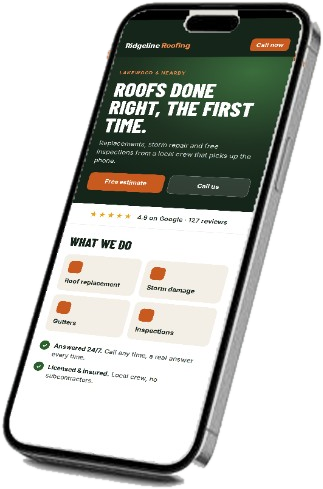
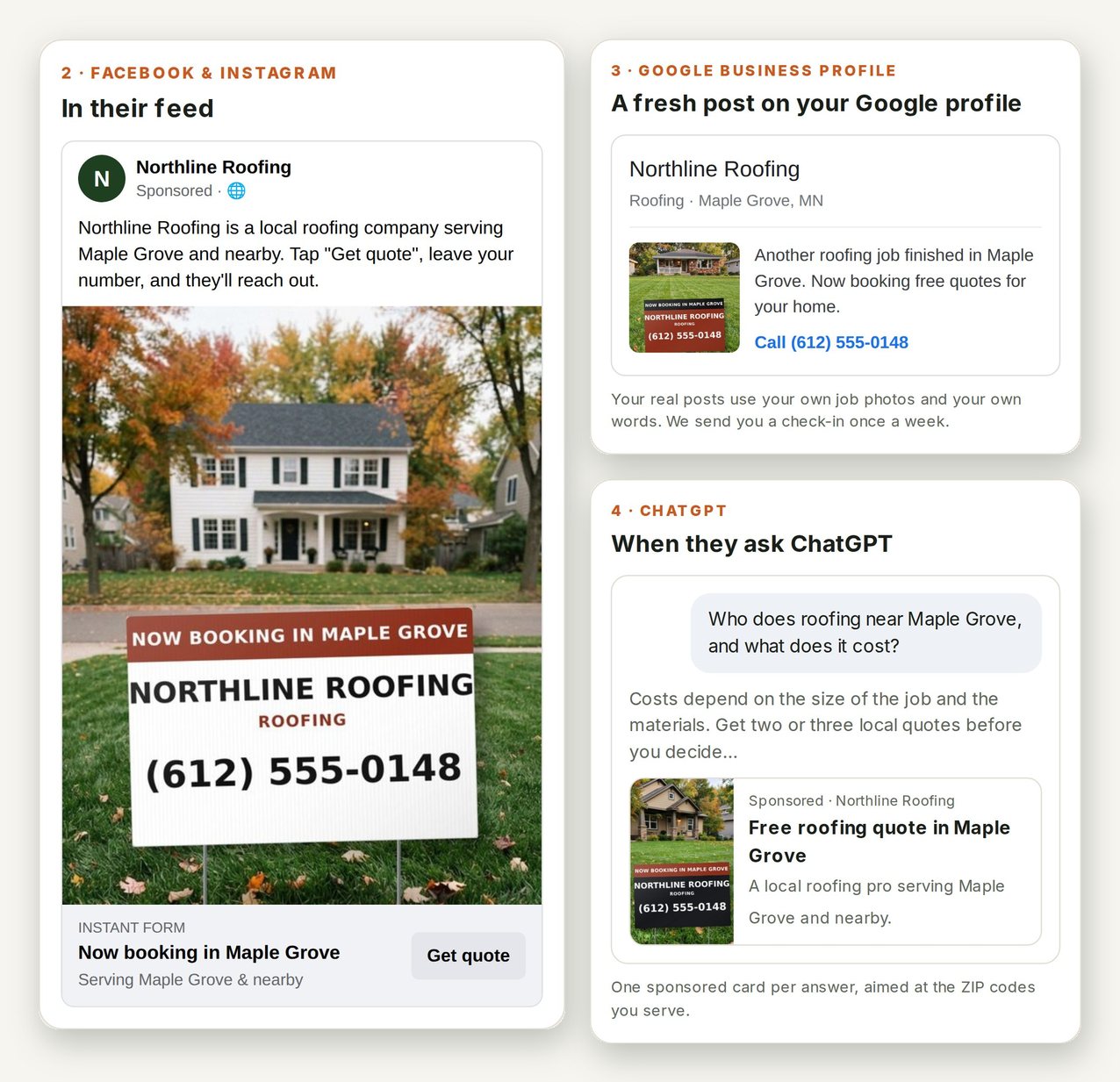
Cleaning leads show up while your hands are in a shower stall: a first-time deep clean, a tenant who needs a move-out by Friday, a client asking to swap days. Outfitter gives your maid service a website built for cleaning, an AI Front Desk that picks up when your crews can’t, and ads and Google reviews run by Emma, your AI agent.
Call or text Emma the way you’d talk to an office manager. She does the rest.
Asks your questions, offers the homeowner a time and texts you the details to confirm.
Built for your trade in about five minutes, from what already wins work.
Six figures to keep in mind before you pay for another lead list. Every one links to where it came from at the bottom of this page.
A maid service lives on its biweekly and monthly book, then gets hit with waves of deep cleans and move-outs at the same times every year. Emma plans the year around those waves so new clients convert to recurring and your cleaners keep full days.
Holiday guests are gone and some clients pause. Win-back texts and a “fresh start” offer go to past clients, and hiring ads run now so new cleaners are trained before spring.
Deep-clean ads go live as the weather warms. Front Desk captures bedrooms, bathrooms, pets and the last time the house was cleaned, so you can quote the first visit fast and pitch the recurring plan on the spot.
Lease endings and home sales stack up move-out cleans with hard deadlines. Front Desk marks them urgent with the move-out date, and postcards go to apartment complexes and streets with listings.
Back-to-school routines bring new recurring clients. Pre-holiday deep-clean ads run in October and November, and a review request follows every visit so your profile is fresh before the December rush.
Your calendar depends on your market. A company near a big university lives by lease dates, and one in a retirement area keeps a steadier weekly book. Emma follows your actual schedule, not a generic one.
Nobody on a cleaning crew can pick up with gloves on and a vacuum running. Front Desk answers the calls your team can’t, asks your intake questions, pre-schedules a walkthrough or first clean, and texts you everything.
Example call. Front Desk follows the rules you give it.
Letting a crew into your home is a trust decision, so clients read the reviews closely. 97% of consumers read reviews for local businesses, and 45% now ask ChatGPT or other AI tools for recommendations.


Tell Emma how you run your service and your site is live in about 5 minutes. Change it by texting her: “Add oven and fridge interiors as add-ons.”
Three changes that affect how a maid service pays its people and gets its leads this year. Know them, and you answer questions from cleaners and clients with confidence.
For context: 55% of cleaning businesses raised prices in the last 12 months, and Facebook (36%) was their top-performing lead channel (Jobber). Check your state’s labor rules before changing how you classify or pay cleaners. [1]
Federal projections show about 193,500 openings a year for maids and housekeeping cleaners through 2034, with almost no growth in total jobs, so most openings are people leaving. The median wage was $17.07 an hour in 2025. The companies that keep a crew are the ones that post clear pay and steady hours. [3] [4]

Call or text one number. Emma, your AI agent, runs your website, your ads, your phones and your hiring, set up for your cleaning company.
Standard, deep, move-out and recurring cleaning laid out the way clients search, with bonding and insurance up front.
Deep-clean ads before spring and the holidays, a review request after every visit, postcards around your recurring clients.
Picks up while crews are cleaning, marks move-out deadlines urgent and pre-schedules first cleans.
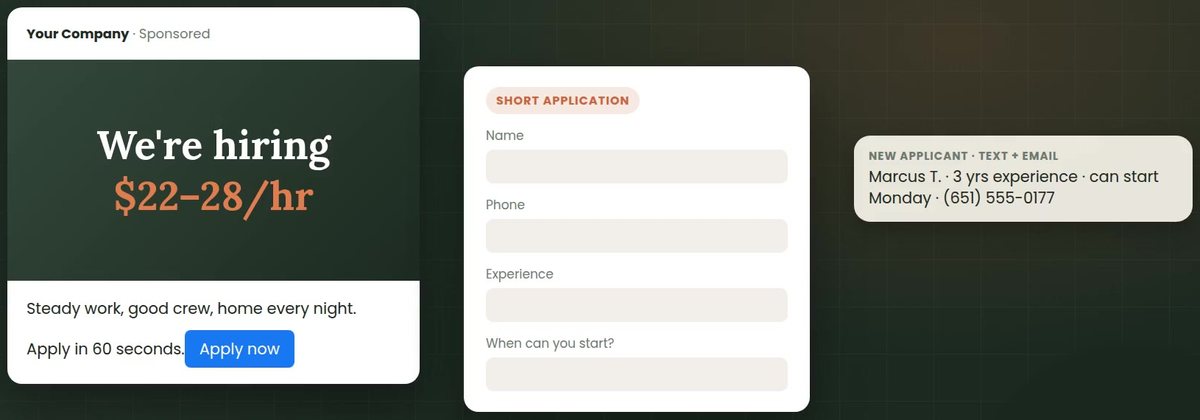
A cleaner job ad with your pay and schedule, and every applicant sent to your phone.

Example conversation.
What works for residential cleaning companies right now: how to set up your website, where to spend on marketing, and how to handle the phone so first-time cleans turn into recurring clients. Written for owners running one to a few dozen cleaners.
On this page: Website · Marketing & ads · Phone calls · FAQ · Sources
Give standard, deep, move-in/move-out, recurring and post-construction cleaning their own pages, each with a checklist of what’s included and what isn’t. Clients compare checklists more than prices. A clear “inside the oven and fridge are add-ons” line stops arguments on the first visit and helps Google match each page to the right search.
People want a number before they call. Post starting prices by bedrooms and bathrooms, or a short quote form that asks beds, baths, square feet, pets and frequency. Nationally, most cleaning visits land between $118 and $238 [2], so a range in that neighborhood with “final price after first clean” sets fair expectations.
Put “bonded and insured,” your background-check policy, whether clients get the same cleaner each time, and what happens if something breaks near the top of the home page. A janitorial bond protects the client if a cleaner steals, and the median cost is low, around $9 a month for house cleaners [4]. Say you carry one.
Stock photos of smiling people with spray bottles convince nobody. Show grout before and after, a degreased stovetop, clean baseboards and your team in uniform at the door. Ask clients for permission and leave out anything personal in the frame, like mail, family photos or house numbers.
Most visitors are on a phone. Put a tap-to-call button and a short request form on every page, keep the form to the questions you truly need, and load the page fast. Outfitter sites include live AI appointment booking and send every request to your email.

Choosing who builds it? 18 website options compared, with first-year costs and who owns the site.
Repeat customers are where cleaning leads come from: 64% of cleaning business leads are repeat customers [1]. Price the first visit as a deep clean, then present biweekly or weekly as the normal next step, with the lower per-visit rate it earns. Track how many first cleans convert, and coach whoever answers the phone on it.
Referrals account for 60% of cleaning leads [1]. Give clients a simple offer, like a credit on their next clean for every friend who books recurring service, and mention it in your thank-you text after the second or third visit. Leave a referral card on the counter after deep cleans.
Cleaning owners rank Facebook as their top-performing channel (36%) [1]. Launch spring deep-clean ads in late February or March and holiday ads in October, target a tight radius around neighborhoods you already serve, and use real photos of your work. Pause ads when the schedule is full instead of buying leads you can’t serve.
A first clean is a lot of work and occasionally misses something. By the second or third recurring visit the client knows your quality, so ask then, by text, with a direct link. 74% of consumers look for reviews from the last three months [5], so keep the asks steady all year.
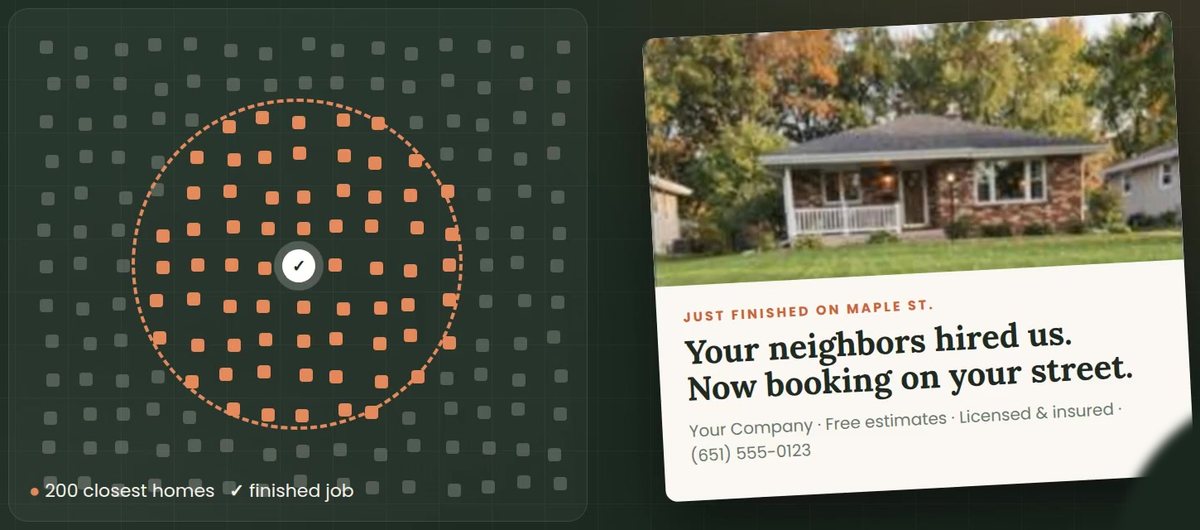
Property managers, apartment complexes and real estate agents need move-out and move-in cleans on deadlines. Introduce yourself with a one-page price sheet and proof of insurance, then deliver fast. Postcards to complexes near your routes keep your name in front of the tenants who leave each summer.
A biweekly client can pay you more than 20 times a year, so judge ads by how many recurring clients they produce. Google is moving house cleaning Local Services Ads into Performance Max starting August 2026 [8]; download your lead history first and keep comparing channels on the same yardstick.
Choosing where to spend? 26 marketing options compared, including which leads are shared with other contractors.
85% of cleaning businesses say they respond to leads the same day [1], so a next-day callback puts you behind most of your competition. Someone looking for a cleaner usually contacts several companies at once. Answer live when you can, and text back within the hour when you can’t.
Ask bedrooms, bathrooms, rough square footage, pets, when the home was last professionally cleaned, one-time or recurring, and how your crew gets in. Write the answers into the client record. Those answers price the job, decide how many cleaners to send and prevent surprises on day one.
Give a range based on size and condition and explain that the first clean sets the recurring price. Mention what’s extra, like inside appliances or windows, before the visit, not after. Clients accept a fair adjustment when they heard about it up front.
Don’t finish with “we’ll get back to you.” Offer two specific times for the first clean or a walkthrough and hold one. If the caller wants recurring service, name the weekday slot they’d keep. Outfitter’s Front Desk does this when you can’t pick up: it pre-schedules a time and texts it to you to confirm.
Text the next day and again about a week later on every quote that didn’t book. When a recurring client cancels, ask why and write it down; the pattern tells you whether it’s price, a cleaner or scheduling. A short win-back text in January can bring back clients who paused over the holidays.
Choosing an answering service? What it should ask and which ones fit this trade, from live answering to AI.
Start by answering every inquiry while it’s warm. Cleaning businesses say most new work comes from repeat customers and referrals, so the job is to turn first-time cleans into recurring clients and make it easy for happy clients to send friends your way.
After that, build recent reviews, put your services and service area on a real website, and run local ads before the spring and holiday rushes. Outfitter’s website costs nothing to start, and you pay only for the ads and calls you use.
Front Desk is 35 cents a minute from your token balance. $35 covers about 100 minutes, which is a lot of first-clean inquiries. With the average house cleaning visit around $176 and a recurring client worth that every week or two, one saved call covers months of answering.
It pre-schedules. Front Desk gathers the details you’d want, like bedrooms, bathrooms, pets and whether they want one-time or recurring service, then offers a time and texts it to you to confirm. You stay in control of which cleaner goes where.
It never quotes a price unless you told it your pricing, and it never promises a date you haven’t approved.
Yes. Every call starts with Front Desk saying it’s an AI assistant. You can use a natural voice or your own voice, cloned only from a recording you make. Clients who let you into their homes deserve to know who they’re talking to, and they do.
Yes. Your Google profile gets you found, but clients want more before they hand over a key or a door code: what a standard clean includes, whether you’re bonded and insured, how recurring service works and where you clean. A website answers that, and AI tools read it too. Outfitter builds yours in about 5 minutes.
Ask after every clean, especially recurring clients who see your work all the time. 74% of consumers look for reviews from the last three months and 47% won’t use a business with fewer than 20, so a steady trickle beats a once-a-year campaign. Emma sends the ask for you.
They can be, since you pay for leads, not clicks. But Google listed house cleaning among the first U.S. categories moving from Local Services Ads into Performance Max starting in August 2026, so expect changes to how you set them up and read results. Download your old lead reports before the switch.
Pick a monthly number and measure it by cost per recurring client, not cost per click, because a biweekly client pays you dozens of times a year. With Outfitter you set the ad budget and change it whenever you want. Ad spend is billed at cost plus 30%, your first $10 of Facebook ads is covered, and there’s no contract.
Treat them as deadline jobs. Get the move-out date, the size of the unit, whether it will be empty and whether a landlord or agent is doing a walkthrough. Front Desk asks those questions, marks the call urgent and texts you, so you can slot it before the deadline or say no quickly.
Clients ask, and many property managers require it. A janitorial bond protects your client if a cleaner steals from the home; Insureon’s data shows a median of about $9 a month for house cleaners. General liability covers things like a broken vase or a damaged floor. Check your state for licensing rules, since they vary.
That depends on how much control you have over the work, and the rules are moving. The Labor Department’s 2024 contractor rule took effect in March 2024, and a replacement was proposed in February 2026. Many states use stricter tests. Get advice from an accountant or employment lawyer, then make your job ads match what you decided.
Be specific in the ad: hourly pay, which days, how many hours, and whether they drive to homes. Federal projections show about 193,500 openings a year for maids and housekeeping cleaners, almost all from people leaving, so you’re competing on clarity and consistency. Emma runs your job ad on Facebook and Instagram and texts you every applicant.
The IRS list of eligible occupations includes home cleaning service workers, with house cleaner as an example. The deduction covers 2025 through 2028, up to $25,000 a year, with income limits. Tips must be voluntary, so a required fee doesn’t count. Your cleaners should ask a tax professional about their own situation.
You don’t need to switch anything. Calls, requests and applicants come to you by text and email, so Outfitter runs next to whatever scheduling software you already use.
Yes. The free version lives at getoutfitter.ai/site/your-name and shows a small Outfitter banner. Website Professional costs $79 a month and adds your own web address, removes the banner and automates Google review requests and posts. It comes with 30 days free and no contract, and your business data stays yours.
Figures on this page come from these reports. Vendor research is labeled as such; government sources are primary.
Start with your cleaning website. It’s live in about 5 minutes. Marketing costs nothing to join, and you pay only for what runs. No contracts.