Homeowners call about a paver patio or a retaining wall after dinner, while your crew is still compacting base on someone else’s job. Outfitter gives your landscaping company a site that shows off your hardscape and planting work, an AI Front Desk that picks up the consult calls you miss, and spring ads and Google reviews that Emma, your AI agent, runs for you.
Call or text Emma the way you’d talk to an office manager. She does the rest.
Asks your questions, offers the homeowner a time and texts you the details to confirm.
Built for your trade in about five minutes, from what already wins work.
Six figures to know before you plan next spring’s marketing. Every one links to its source at the bottom of the page.
Design/build work is won months before the first paver goes down. Emma keeps inquiries coming in winter, keeps your phone covered during the spring crunch and keeps reviews flowing after every walkthrough.
Front Desk answers patio, wall and planting inquiries while you’re on site, asks about yard size and budget range, and pre-schedules design walks for you to confirm.
Crews are out every day laying pavers and setting walls. Review requests go out at each final walkthrough, and postcards hit the streets around every finished backyard.
Fall planting and tree install ads run while soil is still workable. Late inquiries get pre-scheduled for spring before a competitor locks them in.
Homeowners dream about next summer’s backyard now. Ads point them to your project gallery, and crew-leader hiring ads go out so you’re staffed by March.
Frost dates set your calendar. A design/build shop in Denver and one in Dallas break ground in different months, and Emma plans ads around yours.
Homeowners shopping for a backyard call two or three companies and go with whoever calls back first. Front Desk answers when you’re on a skid steer, gathers the project details and pre-schedules a site visit for you to confirm.
Example call. Front Desk follows the rules you give it.
Nearly every homeowner reads reviews before they let a crew tear up the yard, and 45% have asked an AI tool for a local recommendation. The landscapers who come up have recent reviews that mention the work and a site that shows it.


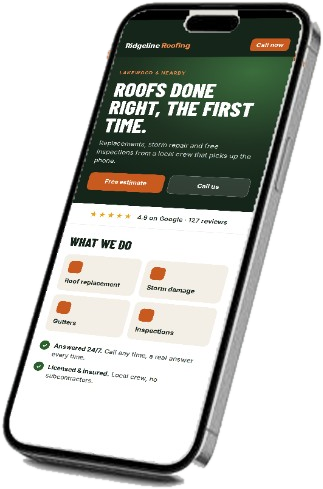
Tell Emma what you build and your site is live in about 5 minutes. Update it with a text: “Add the Johnson retaining wall to the gallery.”
Three shifts that touch design/build bids right now. Put the answers on your site and in your Front Desk script, and you sound like the contractor who keeps up.
For context: NALP puts the U.S. landscaping services market at $188.8 billion in 2025 and expects labor costs to rise about 20% by the end of 2029. Check your local water rules and permit requirements before you design. [2]
BLS expects about 162,500 openings a year for grounds maintenance workers, and landscaping and groundskeeping workers earned a median $18.82 an hour in May 2025. In Landscape Management’s survey, 64% of companies struggled to find reliable people, and NALP expects labor costs to climb about 20% by 2029. [4] [3] [2]

Call or text one number. Emma, your AI agent, runs your website, your ads, your phones and your hiring, set up for your landscaping company.
Hardscape, planting, lighting and drainage work shown with real project photos and your towns.
Winter design ads, spring install ads, review requests at every walkthrough, postcards around finished yards.
Picks up consult calls you miss, flags wall failures and washouts, and pre-schedules site visits.
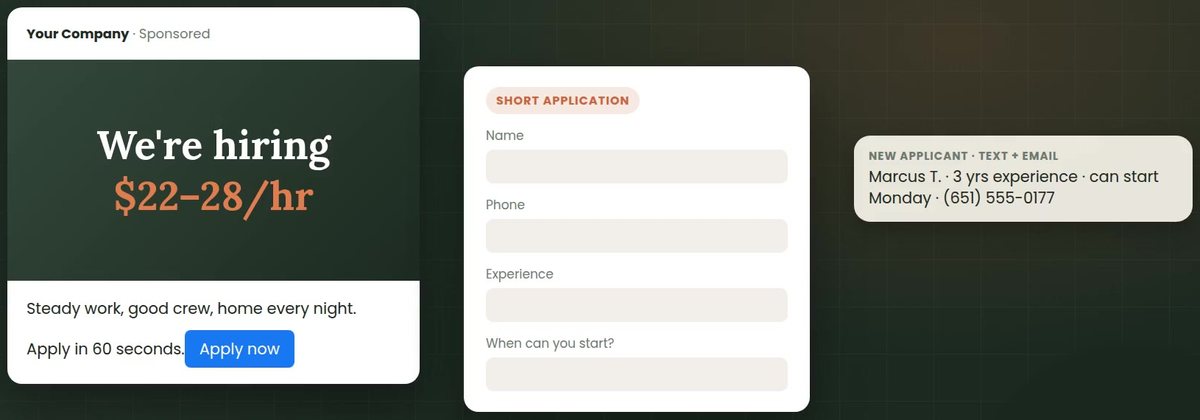
Job ads for crew leaders and hardscape laborers near you, with every applicant sent to your phone.

Example conversation.
A working guide for owners of design/build and hardscape companies: how to build a portfolio site that sells big projects, when and where to advertise, and how to turn a first call into a signed design agreement.
On this page: Website · Marketing & ads · Phone calls · FAQ · Sources
Build separate pages for paver patios, retaining walls, outdoor kitchens and fire features, landscape lighting, planting design and drainage. Each page should say what’s included, what materials you install and what a typical project looks like start to finish. Homeowners searching “retaining wall contractor” want the wall page, not a list of twelve services.
Design/build is sold on photos. Group them by job: before, mid-build with base and edge restraint visible, and finished at golden hour. Name the town and the materials, like “Concrete pavers, 420 sq ft, Edina.” A gallery of real backyards beats any stock image and tells buyers you build at their budget level.
Big-ticket buyers want to know what happens after they call: site visit, design fee or credit, 3D plan or sketch, proposal, build schedule. Publish honest ranges where you can. Angi puts a typical paver patio around $3,800 and full backyard renovations at $15,000 to $50,000 [1][11], so showing where your work falls filters out mismatched leads.
List your contractor license or registration where your state requires one, insurance, years in business and any manufacturer or industry certifications you actually hold. Spell out your hardscape warranty in plain words. Add reviews that mention specific projects, because a stranger is about to let your skid steer into their yard.
Put a tap-to-call button and a short form on every page: project type, rough size, budget range, timing and an optional photo upload. Ask for budget as ranges so people answer. Fast pages matter because most visitors are looking at your gallery on a phone at night. Outfitter’s site adds live AI appointment booking for design walks.

Choosing who builds it? 18 website options compared, with first-year costs and who owns the site.
Homeowners plan backyards months before the ground thaws. Start design-season ads and emails in January and February, aimed at homeowners near your best past projects, so your spring build calendar is full before competitors start advertising. In fall, push planting and late hardscape, and pre-book spring consults from anyone not ready yet.
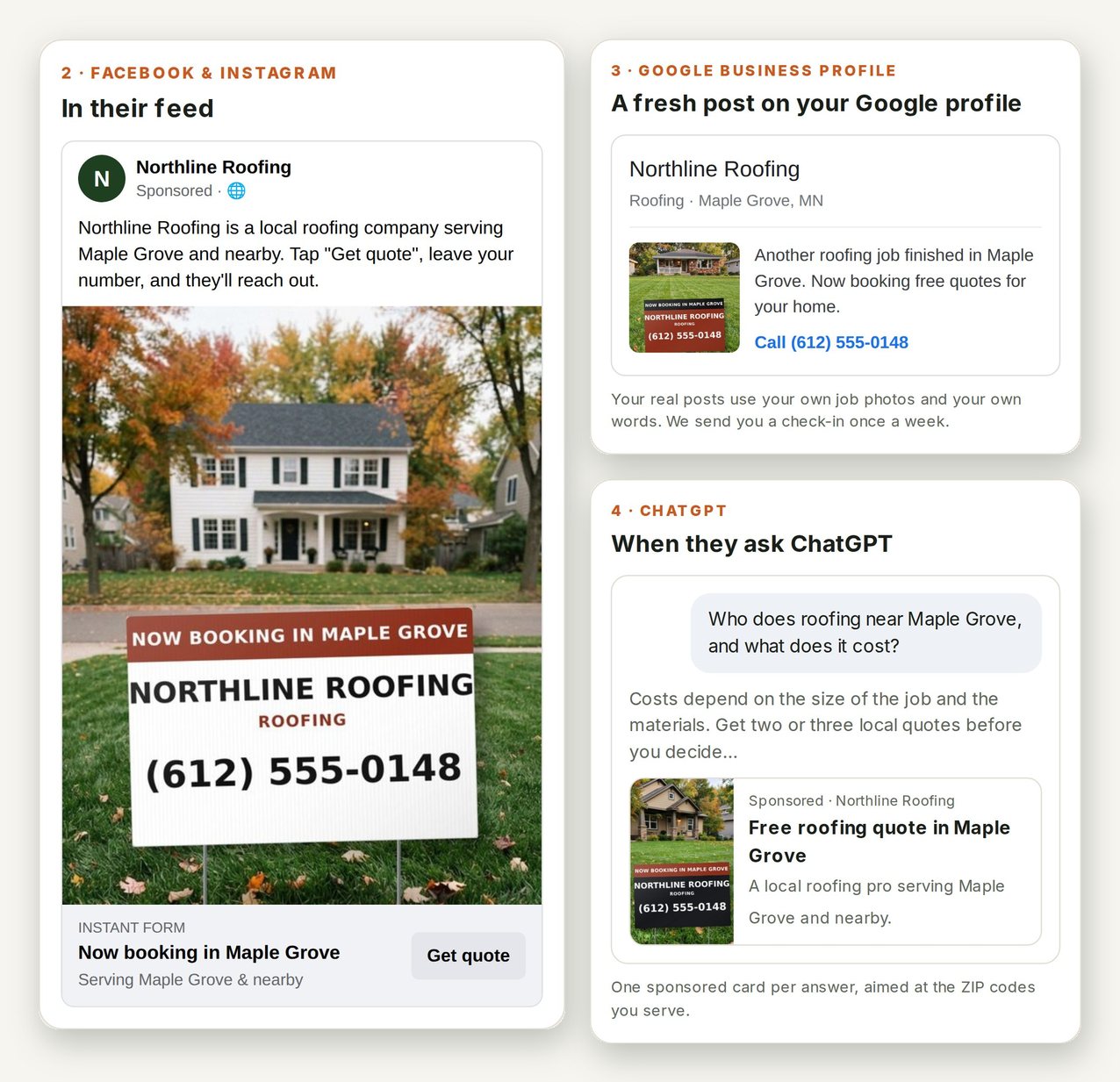
Choose landscaper and landscape designer categories that fit, list each service, and post new project photos every week of build season. Answer every review, mentioning the project. Profiles with fresh photos of real patios and walls look like an active company, and they feed the same signals AI tools use when people ask for a recommendation.
The best moment is when the client is standing on the finished patio. Ask in person, then send the link that day so the review names the work. Most homeowners won’t hire below four stars [5], and a steady ask through summer keeps your profile current into next spring’s buying season.
Paid social works for landscaping because the product is visual. Use before-and-after carousels and short build videos, target homeowners within your service radius, and send clicks to the matching project page, not your home page. Rotate creative by season: patios and outdoor kitchens in late winter, planting and lighting in fall.
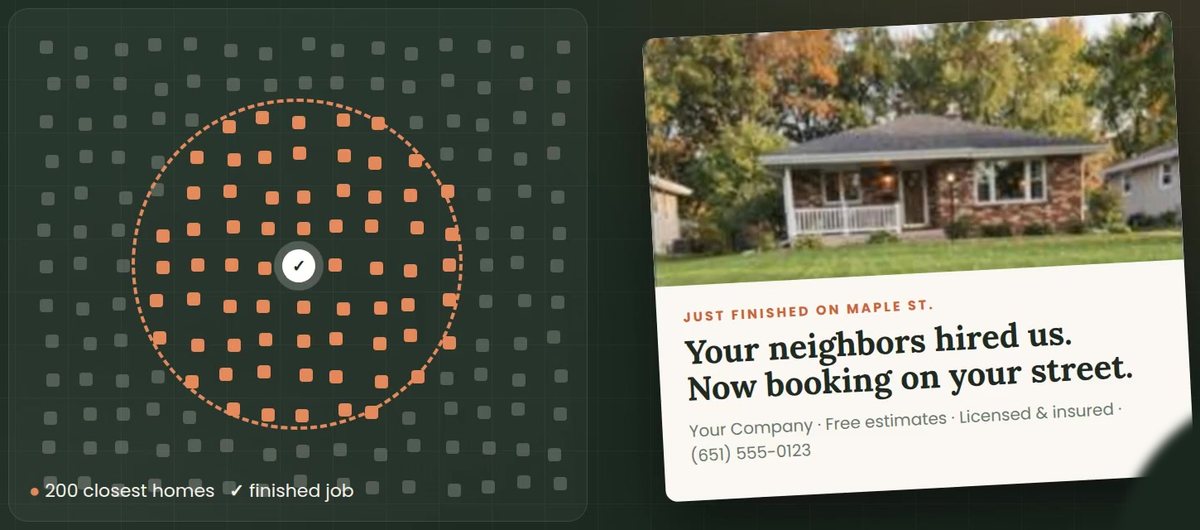
Your crew spends a week or more on one street, and the neighbors watch. Put a yard sign up during the build, then mail the nearest few hundred homes with a photo of the finished project. Outfitter postcards run about 53 cents delivered, so one new patio from a mailing pays for many.
Design/build leads vary wildly in size, so measure each channel by signed contract value. Ask every caller how they found you and log it. A source that brings fewer, larger projects can beat one that floods you with small planting calls. Cut what doesn’t produce signed work after a full season.
Choosing where to spend? 26 marketing options compared, including which leads are shared with other contractors.
Backyard buyers usually contact several companies and meet with whoever responds first. Only about half of calls to home-service companies reach a person [12], so a fast answer is an edge. If you’re on a job site, have a system that answers, gets the details and texts them to you.
Ask what they want built, rough size, what’s there now (lawn, old concrete, slope), budget range and when they hope to be done. Ask whether they have a plan, photos or an HOA approval process. Those answers tell you whether to schedule a design walk, send a price range first or refer the job out.
Every serious call should end with a next step on the calendar: a site visit with a date and time, and a text confirming it. Ask both decision-makers to be there. Explain whether you charge a design fee and whether it’s credited toward the build, so nobody is surprised at the meeting.
Don’t give a firm number by phone, but don’t dodge either. Share a range per square foot or a typical project range, and say what pushes it up: natural stone, walls, steps, demolition and machine access. Callers who balk at a fair range would not have signed the proposal anyway.
Most landscaping proposals die from silence, not a no. Text two days after sending, call at one week, and check in again before your spring calendar fills, mentioning the start date you can still offer. Keep notes from the design walk so each follow-up talks about their yard, not a generic check-in.
Choosing an answering service? What it should ask and which ones fit this trade, from live answering to AI.
Answer every inquiry fast, including the ones that come in at night. Backyard projects are big decisions, and homeowners often call several landscapers and go with whoever responds first.
Then give them reasons to pick you: a gallery of real patios and walls on your website, recent Google reviews that mention the work, and ads that start in late winter while people are planning. Postcards around each finished job reach the neighbors who saw your crew all week.
Front Desk is 35 cents a minute, paid from your token balance. $35 buys about 100 minutes, which covers a lot of consult calls. With the average paver patio around $3,800, one extra project a season covers years of call answering.
No, and that’s on purpose. Front Desk never gives a price unless you’ve told it exactly what to say. It collects what you need to quote: type of project, rough size, access for equipment, timing and photos, then pre-schedules a site visit for you to confirm.
Yes. Front Desk tells the homeowner it’s an AI assistant in its first sentence. You can use a natural voice or a clone of your own voice, made only from a recording you record yourself. Nobody is misled about who they’re talking to.
You decide. Most design/build owners have Front Desk flag retaining walls that are bowing or collapsing, washouts and drainage failures after heavy rain, and problems on a job your crew just finished. Those get texted to you right away; everything else is pre-scheduled.
Ask at the final walkthrough, while the client is standing on the new patio. Emma sends the request that day so the review names the work. Homeowners weigh recent reviews heavily, so asking after every job beats a once-a-year email blast.
Yes. Instagram shows off the work, but Google and AI tools look to your website to learn what you build and which towns you cover. Your site also takes inquiries and books consults while you’re on a job. Outfitter builds one in about 5 minutes and you can add project photos by text.
AI tools lean on the same signals as Google: consistent business details, a website that names each service and service area, and a steady flow of recent reviews. Review requests and Google posts run on autopilot with Website Professional. ChatGPT ads are coming in November.
Pick a monthly number and measure it by booked projects, not clicks. Your ad budget with Outfitter is yours to set and adjust mid-season. Ads run at cost plus 30%, your first $10 of Facebook ads is free, and there’s no contract.
Earlier than you think. Most homeowners plan backyard projects over the winter, so design-season ads in January and February fill your spring board before the ground thaws. Emma times ads to your frost dates.
Put the hourly rate, season length and schedule right in the ad, and list what matters: hardscape experience, equipment time, a clean driver’s license. BLS counts about 162,500 grounds job openings a year, and 64% of landscape companies in one industry survey had trouble finding reliable workers. Emma runs your job ad on Facebook and Instagram and sends every applicant to you.
On homes, generally yes, but commercial work is changing. Colorado’s SB24-005 bars installing nonfunctional turf, artificial turf and invasive plants on commercial, institutional, industrial and HOA common-area properties, with local rules starting January 1, 2026. California’s AB 1572 stops potable water on nonfunctional turf at commercial, industrial and institutional sites from 2028 and HOA common areas from 2029. Check your city’s rules before you bid.
It works alongside them. Every call, inquiry and applicant is texted and emailed to you, so you keep estimating and scheduling in whatever software you already use.
There isn’t one. The free site is at getoutfitter.ai/site/your-name with a small Outfitter banner and stays free. For $79 a month, Website Professional gives you your own domain, takes the banner off and handles Google review requests and posts automatically. You get 30 days free, there’s no contract, and your business data stays yours.
Figures on this page come from these reports. Vendor research is labeled as such; government sources are primary.
Start with a landscaping website that’s up in about 5 minutes. Joining the marketing side costs nothing; you pay for the ads and calls you actually use. No contracts.