A handyman’s phone never stops: a sticking door, a TV to mount, a grab bar for Mom, a realtor’s punch list due Friday. Each call is small, and you can’t take any of them with a drill in your hand. Outfitter gives your handyman business a website that lists everything you fix, an AI Front Desk that gathers the whole to-do list when you can’t answer, and local ads and Google reviews run by Emma, your AI agent.
Call or text Emma the way you’d talk to an office manager. She does the rest.
Asks your questions, offers the homeowner a time and texts you the details to confirm.
Built for your trade in about five minutes, from what already wins work.
Six numbers to keep in mind before you take another 20-minute job across town. Each is tied to a source listed at the foot of this page.
Handyman work never fully stops, but what people call about changes with the calendar. Emma shifts your ads to match, so the van stays full year-round.
Sellers need repairs before photos, and buyers’ inspectors hand over long lists. Ads aimed at realtors and sellers go up early. Front Desk takes down the whole list and the deadline, then texts it to you.
Loose deck boards, fence gates, screens and new-home odd jobs. A review request goes out after every visit, so your star count climbs while you’re busiest.
Weatherstripping, caulking, gutter guards and holiday light hangs. Guests are coming, so the list of “finally fix it” jobs gets long. Postcards go to the streets where you already work.
TV mounts, shelving, drywall patches, grab bars and stair railings. Families visiting over the holidays notice what an aging parent needs. Hiring ads run now for spring.
In the Sun Belt, outdoor work runs longer; up north, it shuts down with the first snow. Emma uses your local weather and listing season, not a template.
Handyman calls rarely come with one item. Front Desk answers when you can’t, on your number or a new local line, takes down the full list, pre-schedules a block of time and texts it all to you.
Example call. Front Desk follows the rules you give it.
You’re going inside people’s homes, often an older homeowner’s, for small jobs no big contractor wants. Most people read reviews first, and more are asking ChatGPT who to call. The handymen who come up have plenty of recent reviews and a site that lists what they fix.


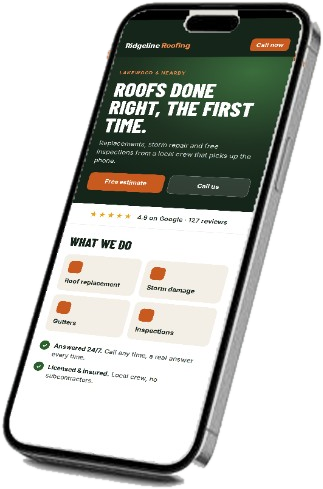
Tell Emma what you fix and where you’ll drive. Your handyman site goes up in about 5 minutes. Need a change? Text her: “Add a half-day rate and a grab bar page.”
Three changes that affect what a handyman can take on and what it costs. Know them before you write the next estimate.
State limits vary a lot. Minnesota exempts people grossing no more than $15,000 a year from the work its residential license covers, with a yearly filing. In Virginia, a single contract over $1,000 needs at least a Class C license. Check your state board before you advertise. [4] [5]
General maintenance and repair workers earned a median of $23.84 an hour in 2025, and the BLS projects about 148,700 openings a year through 2035. Property managers and schools are hiring the same multi-skilled people, often with benefits. [8]

Call or text one number. Emma, your AI agent, runs your website, your ads, your phones and your hiring, set up for your handyman business.
Every repair and install you do, with your minimum and service area, laid out for homeowners and realtors.
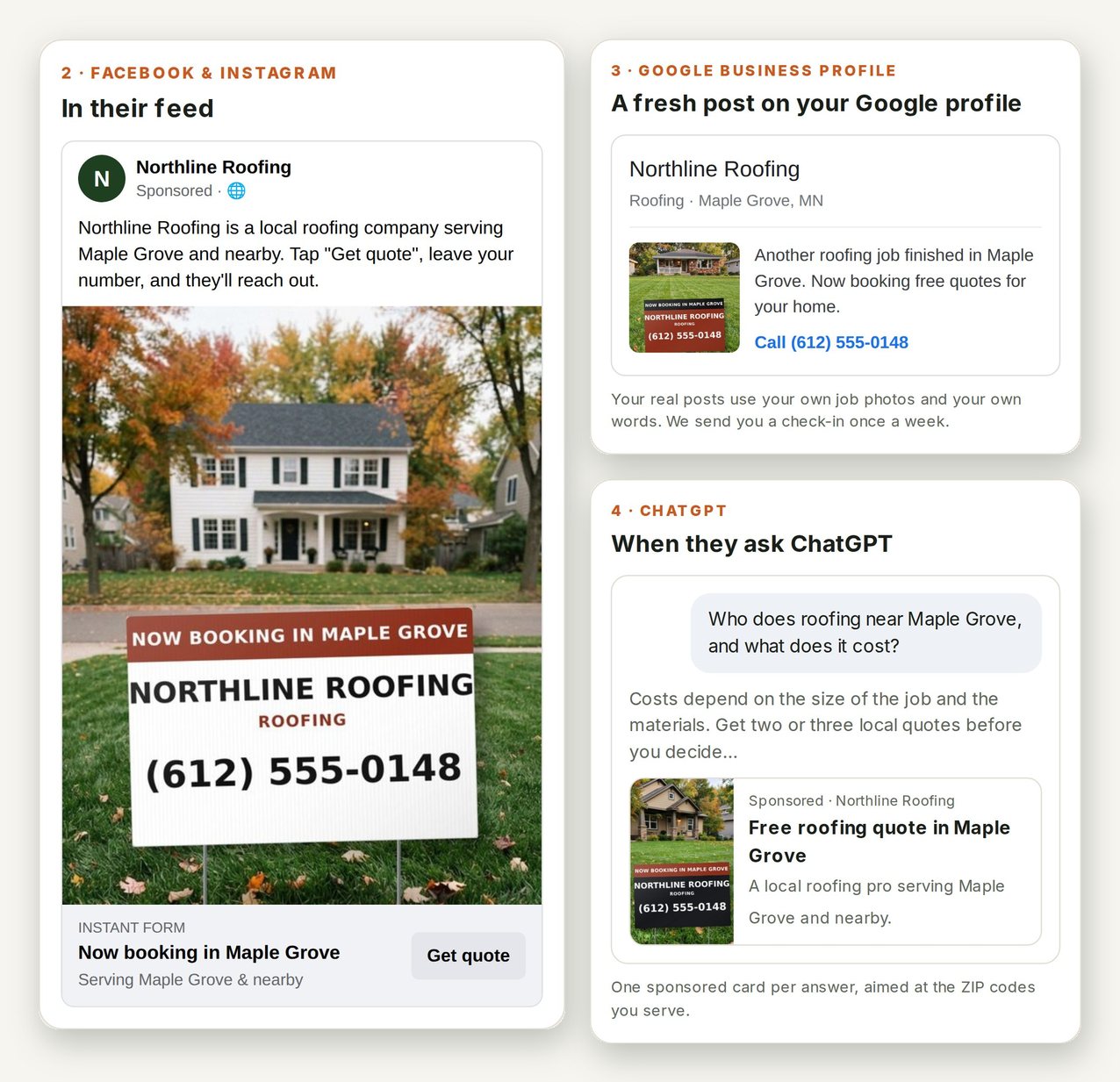
Listing-season ads, aging-in-place campaigns, review asks after every visit and postcards to nearby homes.
Takes down the whole to-do list while you’re on a ladder and pre-schedules a block for you to confirm.
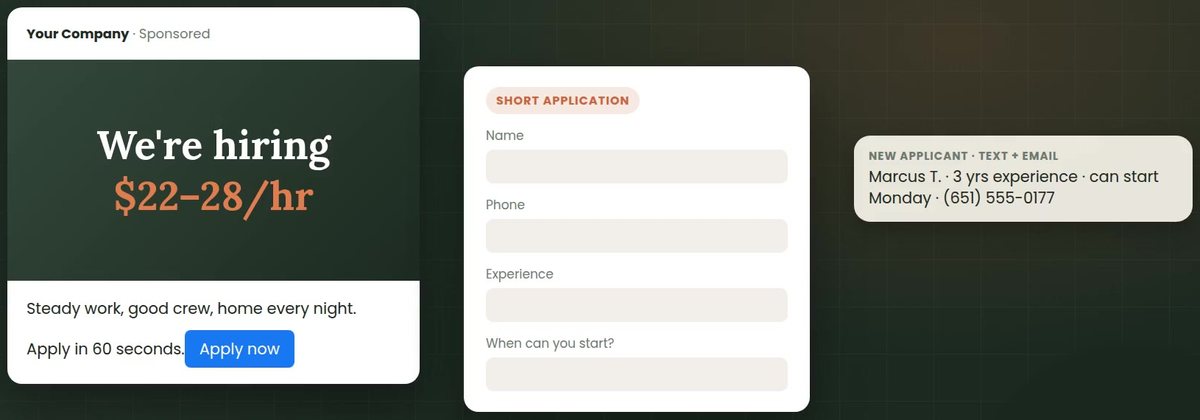
A job ad for handymen in your area, with each applicant sent to your phone.

Example conversation.
A practical playbook for handyman business owners on turning small repair calls into profitable visits: what your site should say, which customers to market to, and how to handle the phone so every trip is worth the drive.
On this page: Website · Marketing & ads · Phone calls · FAQ · Sources
Homeowners search for the exact problem: sticking door, drywall hole, TV mounting, loose railing, caulking a tub. Build a page or a clear section for each common job, with a photo from your own work. Then say what you send to licensed electricians or plumbers. That honesty builds trust and filters out calls you can’t take.
A posted minimum stops one-lightbulb calls before they reach your phone and pushes customers to bundle. Fixr reports many handymen charge at least $130 for jobs of 30 minutes or less [2]. Show a minimum, an hourly or half-day rate, and how you handle materials, and you’ll get bigger, better lists.
Let customers type their whole list, attach photos and say when they need it done. Ask for sizes where they matter, like TV size and wall type, door width or the area of drywall damage. A good list form lets you estimate time, pack the right parts and fill a half-day without a site visit.
Rules vary widely. California caps unlicensed jobs at $1,000 including materials, and ads must say you’re not licensed [3]. Virginia requires at least a Class C license above $1,000 per contract [5]. Put your license number or required disclaimer, your insurance and any lead-safe certification on every page.
Grab bars, stair railings, lever handles, brighter lighting and threshold ramps are steady work. AARP found 75% of adults 50 and older want to stay in their homes [6]. Write the page for adult children as much as for seniors, and show photos of neat grab bars properly anchored in tile.

Choosing who builds it? 18 website options compared, with first-year costs and who owns the site.
Add every service you offer to your Google Business Profile, set a realistic service area and upload job photos weekly. Post short updates like “fall weatherstripping openings this week.” The handyman with complete details and fresh photos looks active, and that matters in a crowded local map.
You visit more homes per week than most trades, so you have more chances to ask. Ask every time, by text, the same day. BrightLocal found 47% of consumers won’t use a business with fewer than 20 reviews [11]. Outfitter’s Website Professional sends these requests automatically after each visit.
Real estate agents need inspection repairs done before closing, and landlords need turnovers between tenants. Visit a few brokerages with a one-page sheet of your rates and turnaround times, and run Facebook ads to local agents in spring. Fast, photo-documented work brings repeat lists all year.
Sell a “honey-do half day,” a fall weatherproofing package or a new-homeowner starter visit. Packages raise the average ticket, which HomeAdvisor puts around $390 [1], and make your schedule predictable. Mention the package in ads, on your site and when someone calls with a single small item.
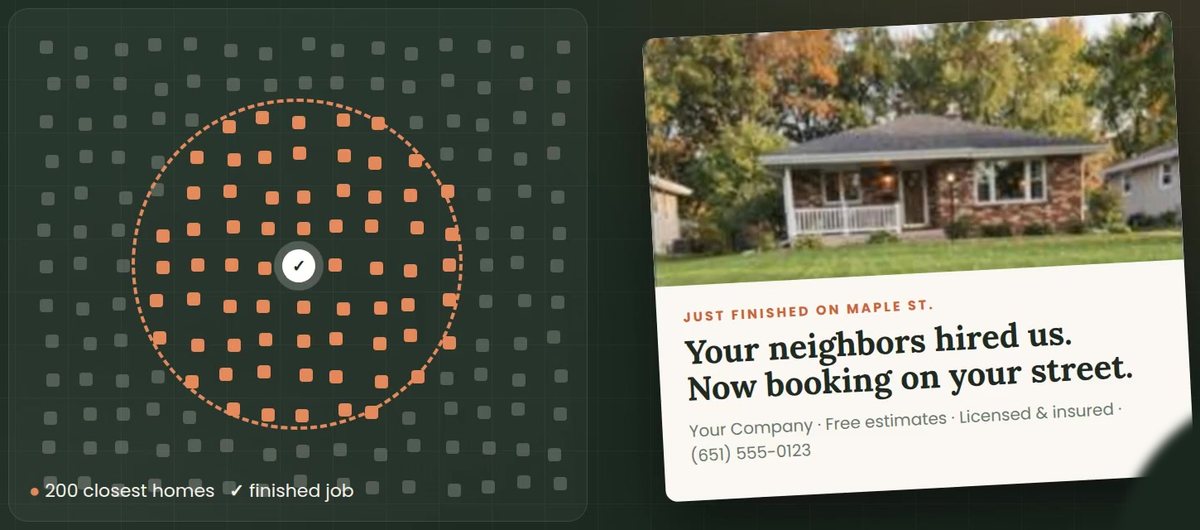
Postcards and door hangers work well for handymen because the work is close by and recurring. Pick streets near your current jobs, especially established neighborhoods with aging homeowners. Feature one season’s work, like holiday light hanging in November or deck repair in May.
NAHB says building material prices are up 34% since December 2020 [9]. Charge materials at cost plus a markup and update your listed rates at least once a year. Track which lead sources produce full-day jobs versus one-item stops, and spend more where the bigger lists come from.
Choosing where to spend? 26 marketing options compared, including which leads are shared with other contractors.
Never stop at the first item. Ask “What else is on your list?” at least twice. A single faucet drip is a money-losing trip; a faucet, two doors, a grab bar and a railing is a profitable half-day. Write it all down with sizes and materials so you can plan parts.
For each item ask what material it is, how big it is, what floor it’s on and whether the house was built before 1978. That last one matters because paid work disturbing more than 6 square feet of paint per room in older homes falls under EPA’s lead-safe rules [10].
If a caller has one small job, explain your minimum and invite them to add items. Most people have a list they’ve been putting off. Saying it up front avoids the awkward moment at the door and turns small calls into full visits.
You’re on ladders and in crawl spaces all day, and a caller with a closing deadline won’t wait. Use a call-back window you actually keep, an assistant, or Outfitter’s Front Desk to collect the list and pre-schedule a time for you to confirm. Return urgent realtor calls first.
Text a confirmation with the list and the arrival window, then a reminder the day before. After the visit, send the invoice, photos of the finished work and a review link. A week later, ask if anything else came up. Handyman customers who feel looked after call back for years.
Choosing an answering service? What it should ask and which ones fit this trade, from live answering to AI.
Answer more calls and make every visit bigger. Front Desk collects the full to-do list when you can’t pick up, so one call becomes a half-day instead of a 20-minute stop.
Then aim your marketing: realtors and sellers in spring, weatherproofing in fall, aging-in-place work all year, and a review request after every visit.
Front Desk costs 35 cents a minute from your token balance; one token equals one cent. $35 buys about 100 minutes of answered calls.
HomeAdvisor puts the average handyman project around $390, so one extra job a month more than covers it.
It depends on your state. California raised its limit to $1,000 per job, labor and materials included, on January 1, 2025, as long as no permit is needed and you have no employees. Minnesota exempts people grossing no more than $15,000 a year from the work its residential license covers, with a yearly filing. Virginia requires at least a Class C license for a single contract over $1,000.
Electrical, plumbing and gas work usually need a licensed tradesperson no matter the size. Check your state board before you say yes to one of those.
Most do. Fixr reports many handymen charge at least $130 for work taking 30 minutes or less. A minimum or a half-day rate protects you from drive time eating small jobs, and it nudges customers to bundle their list. Put it on your website and tell Front Desk whether to mention it.
Realtors need someone who answers, shows up before closing and sends photos when it’s done. Run ads to agents in listing season, say on your website that you handle inspection repairs, and have Front Desk mark calls with a closing date urgent so you see them first.
Yes. AARP found 75% of adults 50 and older want to stay in their homes, and among those expecting to need changes, 72% mention grab bars. HomeAdvisor puts grab bar installation around $300. It’s careful, repeat work, and adult children often find you online for a parent.
If you’re paid to disturb paint in a home built before 1978, EPA’s rule applies to you, even as a one-person business. Minor jobs under 6 square feet of paint per room inside, or 20 square feet outside, are exempt. Patching, sanding and replacing windows or doors in older homes can easily go over that.
Yes. Front Desk asks for each item on the list, any deadline and anything you want to know, then pre-schedules a time block for you to confirm and texts you the details. It won’t quote prices or promise a date unless you tell it to.
Yes. The first thing Front Desk tells every caller is that it’s an AI assistant. It can use a natural voice or your own, cloned only from a recording you make. Your callers, many of them older homeowners, always know who they’re talking to.
Yes. Google and Nextdoor get you noticed, but your website is where people check the full list of what you do, your minimum, your towns and whether you’re licensed or insured. AI tools read it to recommend you. Emma can have yours up, free, in about 5 minutes.
Ask after every visit while the door finally closes right. BrightLocal found 47% of consumers won’t use a business with fewer than 20 reviews, and most care about the last three months. Website Professional sends review requests for you.
Look at your numbers. NAHB says building material prices are up 34% since December 2020, and 2025 tariffs added more. Many handymen charge materials separately with a markup, so a price change on a box of screws doesn’t eat into labor.
Say the pay, the hours and whether there’s a company van. List the skills you need, like carpentry, drywall and basic fixture work. The BLS projects about 148,700 openings a year for general maintenance and repair workers, so be specific. Emma runs your job ad on Facebook and Instagram and sends you every applicant.
No catch. Your starter site lives at getoutfitter.ai/site/your-name with a small Outfitter banner, and it costs nothing, ever. For $79 a month, after 30 days free, Website Professional adds your own web address, removes the banner and sends Google review requests and posts automatically. No contract, and you own your business data.
Figures on this page come from these reports. Vendor research is labeled as such; government sources are primary.
Get your handyman site running first; it takes about 5 minutes. There’s no charge to join the marketing; you only pay for what runs. No contracts.