Kitchen and bath clients shop for months, browse photos at midnight and call when they finally feel ready, often while you’re mid-consult in the showroom. Outfitter gives your company a website that shows off your cabinets, tile and finished rooms, an AI Front Desk that answers the calls you can’t, and ads and reviews handled by Emma, your AI agent.
Call or text Emma the way you’d talk to an office manager. She does the rest.
Asks your questions, offers the homeowner a time and texts you the details to confirm.
Built for your trade in about five minutes, from what already wins work.
Six numbers on spend, timing and buyers, from Houzz, NKBA, the BLS and the Cost vs Value report. Each one links to its source below.
Design inquiries jump after the holidays, when people have stared at their old kitchen through a month of hosting. They spike again in early fall, when everyone wants it finished before family arrives. Emma runs your marketing to that clock.
Kitchen and bath ads go out as people set the year’s plans. Front Desk fields consult calls while you’re with clients and pre-schedules showroom visits for you to confirm.
Clients pick door styles, tile and fixtures. Emma posts finished projects and sends review requests after each final install.
Crews are setting cabinets and tile. Postcards go to the houses around each job, and bath ads aimed at aging-in-place upgrades keep the fall pipeline growing.
Front Desk takes the rush and asks your timeline questions without promising a date. Leak calls on recent installs get flagged urgent and texted to you.
Cabinet lead times and your install backlog move these dates. Emma works from the calendar you give her, not a generic one.
Invoca’s 2026 call study found 55% of home-services businesses never ask the caller to book. Front Desk always asks: it picks up the calls you can’t, gathers room, style and budget, pre-schedules a consult and texts you the details.
Example call. Front Desk follows the rules you give it.
97% of consumers read local reviews, and 45% now ask AI assistants for names. For a room they’ll use every day for decades, they want proof: photos of finished kitchens and baths, and recent reviews that mention the design process.


Tell Emma about your shop and the site is ready in about 5 minutes. Text her to update it: “Add the walnut island kitchen to the gallery.”
Three shifts that touch cabinet pricing, countertop choices and shower design this year. Have a clear answer for each, and you sound like the designer who knows the product.
For context: NKBA’s Q1 2026 index showed kitchen and bath prices up 4.3% year over year, retail input costs up 6.3%, and 51% of firms expecting skilled-labor shortages to affect them. Check current pricing with your suppliers before you quote. [6]
The BLS projects about 6,400 openings a year for flooring installers and tile and stone setters, with tile and stone setters earning a median $55,690 in May 2025. In NKBA’s Q1 2026 survey, 51% of kitchen and bath firms expected skilled-labor shortages to affect their business. [7] [6]

Call or text one number. Emma, your AI agent, runs your website, your ads, your phones and your hiring, set up for your kitchen and bath company.
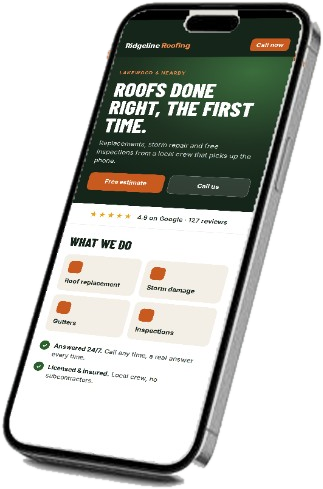
Kitchen and bath galleries, cabinet and countertop pages, and showroom hours, laid out like a showroom.
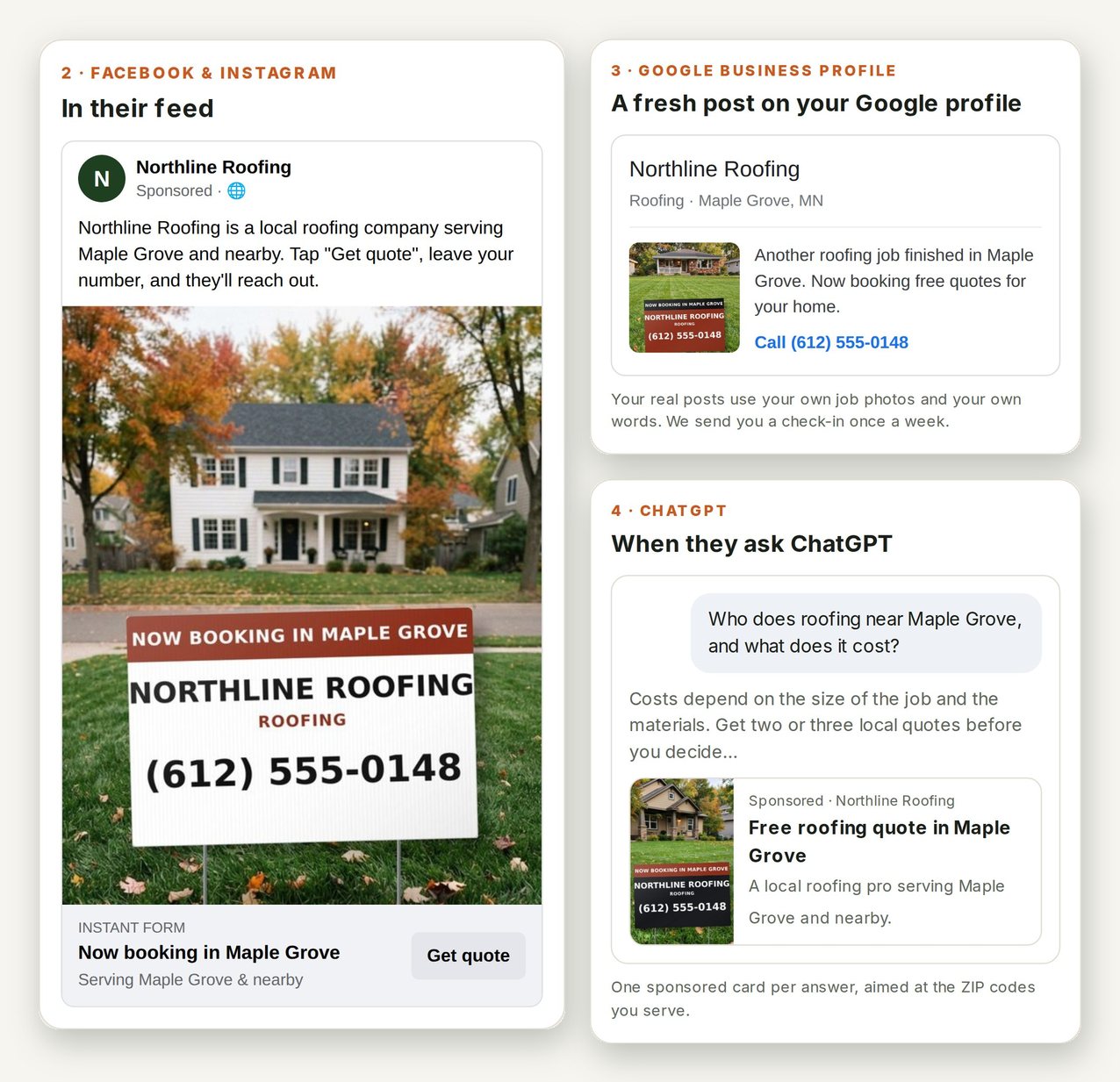
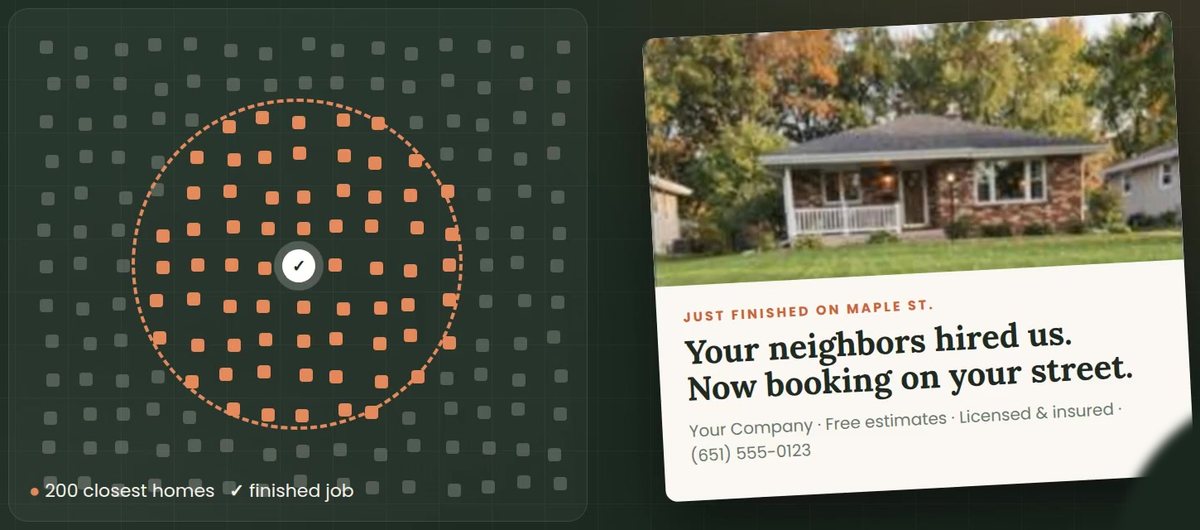
Design-season ads in January, review requests after each install, postcards to neighbors of finished kitchens.
Answers while you’re mid-consult, flags leaks on recent installs, pre-schedules design visits.
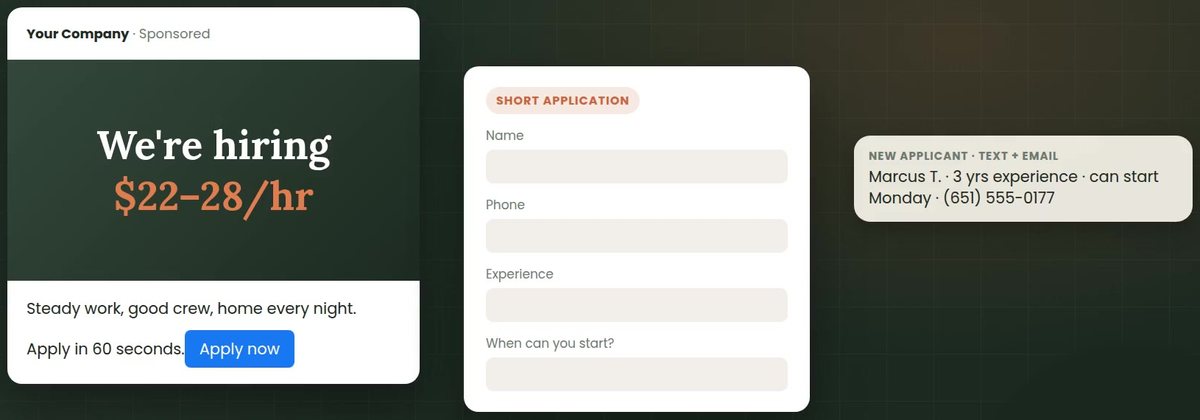
Job ads for tile setters and cabinet installers, with every applicant sent to your phone.

Example conversation.
What design-led kitchen and bath companies should put on their websites, how to market a long, considered purchase, and how to turn a phone call into a paid design consultation and a signed selection.
On this page: Website · Marketing & ads · Phone calls · FAQ · Sources
Let visitors filter finished projects by kitchen or bath, then by look: white shaker, walnut slab, painted inset, spa bath, curbless shower. Wood cabinets just passed white as the top kitchen choice, 29% to 28% [2], so make sure your wood kitchens are easy to find. Label each project with the door style, countertop and tile used.
84% of kitchen renovators update their cabinets [2], and most weigh countertops and backsplash just as carefully. Write a page for each: the cabinet lines you carry and their construction, the stone and quartz options you fabricate or source, and the tile you install. Product pages catch the shoppers who start with materials, not contractors.
Spell out each step: first consult, measure, design presentation, selections, order, install. Say whether the design fee is credited toward the job if they sign. Homeowners spend about 9.5 months planning a kitchen and only 5.8 months building it [3], so a clear process page keeps you on their list the whole time.
Show the showroom address, hours and a few photos on every page, with directions and parking. Note whether visits are walk-in or by appointment, and whether evening or Saturday slots exist. For a showroom business, a visit is the conversion. Make booking one obvious and quick from a phone.
Create separate pages for primary bath remodels, guest bath updates, tub-to-shower conversions and accessible or aging-in-place baths. Mention curbless entries, grab bars, blocking and waterproofing systems you use. A midrange bath remodel averaged $26,138 nationally in 2025 [4], so show what that level of finish looks like.

Choosing who builds it? 18 website options compared, with first-year costs and who owns the site.
Kitchen and bath shoppers save photos for months before they call. Post every finished room to Houzz with full product tags: cabinet line, door style, countertop and tile. Answer questions under your photos. 87% of kitchen renovators hire a pro [2], and many find that pro by saving an image of their work.
Ask after the final install, and suggest the client mention the design process, the layout and how the crew treated the house. Detailed reviews sell the next consult better than “great job.” BrightLocal found 47% of consumers skip businesses with under 20 reviews [1]. Outfitter’s Website Professional sends review requests and Google posts for you.
Kitchen interest climbs after the holiday hosting season. Start Facebook and Instagram ads in January with your best finished kitchens, and a second push in late summer for people who want a bath done before guests arrive. Show real rooms with natural light, and invite people to book a design consultation, not “get a quote.”
Hold a Saturday open house when a new cabinet display or tile line arrives, and invite past clients, local designers and realtors. Keep it small: coffee, samples, a short talk on layout mistakes. Events give past clients a reason to bring friends, and give you photos to post.
With the median kitchen at $24,000 [3] and full remodels running much higher, many clients finance. If you work with a lender, mention it on your kitchen page and at the design presentation, not after sticker shock. A monthly-payment option keeps clients from cutting the island or downgrading the cabinets.
Count where each consult came from and how many turned into signed design agreements and then contracts. Kitchen and bath work has a long cycle, so measure over months, not weeks. NKBA’s market index cut its 2026 outlook to a 2% decline [5]; in a softer market, put money only behind sources that sign.
Choosing where to spend? 26 marketing options compared, including which leads are shared with other contractors.
You can’t walk out of a design presentation to grab the phone, but the caller may be ready after months of browsing. Have a team member or answering service pick up, and return every message the same day. Outfitter’s Front Desk can answer, ask your questions and pre-schedule a consult for you to confirm.
Ask kitchen or bath, which room, whether they’re keeping the layout or moving plumbing and walls, and whether they’ve picked cabinets, counters or tile. Ask about timing and anything driving it, like a parent moving in. Those answers tell you whether this is a vanity swap or a full gut before you book a slot.
Ask what range they have in mind, and share what your typical kitchens and baths run so they can place themselves. Clients who expect a $24,000 kitchen to include moved walls and custom inset cabinets need that conversation now. Qualifying early protects your designer’s time for buyers who can sign.
Invoca’s 2026 report found 55% of home-services businesses don’t ask the caller to book [13]. Always offer two times for a showroom or in-home consult, and ask them to bring photos, measurements and inspiration images. Confirm by text with the address and how long to plan for.
Call within a few days of presenting the design and ask what they’d change. If selections stall, set a selection appointment at the showroom to pick tile, hardware and fixtures together. Decisions made in person, with samples in hand, move a project from “thinking about it” to an order.
Choosing an answering service? What it should ask and which ones fit this trade, from live answering to AI.
Show finished rooms and stay reachable. Houzz found kitchen projects take about 9.5 months of planning before construction, so homeowners browse your galleries and reviews for a long time before they call. When they do, someone has to answer.
Keep your website full of your own projects, ask for a review after every install and run design-season ads early in the year.
At 35 cents a minute, paid from tokens, Front Desk runs about 100 minutes on $35. Houzz puts the median kitchen remodel at $24,000, so a single consult that would have gone to voicemail can cover a long stretch of answering. No contract.
It pre-schedules them. Front Desk asks your questions, offers a time for a showroom or in-home visit, and texts and emails it to you to confirm. You stay in control of your calendar.
Yes. Before any talk of cabinets or tile, Front Desk tells every caller it’s an AI assistant. It can speak in a natural voice or your own voice, cloned only from a recording you make yourself.
Front Desk marks leaks on fixtures you installed as urgent and texts you the details right away. You can tell it what to say first, for example to shut the supply valve under the sink or toilet.
Ask after every final install, the same day. BrightLocal’s 2026 numbers: 74% of consumers check for reviews from the past three months, and 47% rule out a business with fewer than 20. Smaller jobs like vanity swaps and shower conversions count. Website Professional sends the request automatically.
Yes. Your website is your showroom after hours. It shows your cabinet lines, countertop and tile options and finished rooms, and it’s what AI tools read when someone asks who designs kitchens nearby.
Pick a monthly budget and judge it by signed design agreements. You set the ad budget with Emma and can raise or cut it whenever you like. Ads run at cost plus 30%, the first $10 of Facebook ads is free, and nothing is locked in.
Imported kitchen cabinets and vanities have carried a 25% Section 232 tariff since October 14, 2025. A planned increase to 50% was postponed to January 1, 2027. Explain where your lines are made and how your quotes handle price changes.
Not nationally. In California, Cal/OSHA released a draft in September 2026 that would ban fabricating and installing engineered stone with more than 1% crystalline silica, after 650-plus stoneworkers were sickened. It is not final yet. Countertops already installed aren’t affected.
Federally, yes. The Department of Energy repealed the rule that treated each nozzle as its own showerhead, effective May 15, 2025, so the 2.5 gallons-per-minute limit applies to the showerhead as a whole. Some states set lower flow limits, so check yours.
Somewhat. NKBA and John Burns cut their 2026 forecast to a 2% decline in Q2 2026, and the design segment scored below 50. Projects are still happening, but clients take longer to commit, which makes answering and following up matter more.
Put the pay and schedule in the ad and name the skills you need, like waterproofing and cabinet leveling. The BLS projects about 6,400 openings a year for flooring installers and tile and stone setters. Emma runs the ad on Facebook and Instagram and sends every applicant to you.
No. Keep your design and quoting tools. Outfitter sends every call, request and applicant to you by text and email, so it works next to whatever you use.
None. The no-cost version is hosted at getoutfitter.ai/site/your-name, carries a small Outfitter banner and stays free for good. For $79 a month, Website Professional adds your own web address, removes the banner and automates Google review requests and posts. You get 30 days free, with no contract.
Your client and project data belongs to you.
Figures on this page come from these reports. Vendor research is labeled as such; government sources are primary.
Open with a kitchen and bath website that works like a showroom, ready in about 5 minutes. Marketing has no sign-up fee: you pay only for the ads and minutes you use, with no contract.