A general contractor’s best lead usually calls while you’re walking a framing inspection or chasing a sub. Outfitter gives your company a website that shows the projects you build, an AI Front Desk that screens bid requests you can’t pick up, and local ads and reviews run for you by Emma, your AI agent.
Call or text Emma the way you’d talk to an office manager. She does the rest.
Asks your questions, offers the homeowner a time and texts you the details to confirm.
Built for your trade in about five minutes, from what already wins work.
Six figures to weigh before you chase another bid list. Every figure links to its source at the bottom of this page.
Homeowners who want a summer addition start calling in January, and the drawings, permits and bids fill the gap before ground breaks. Emma keeps leads coming early so your crews have a backlog when the weather opens up.
Addition and whole-home ads run while homeowners are stuck inside planning. Front Desk sorts serious inquiries by scope, budget and timeline so you price the right ones first. Hiring ads for carpenters go out now.
The phone peaks as plans come back from the architect. Front Desk catches bid requests while you’re on site and pre-schedules site walks for you to confirm.
Every crew is framing, so callbacks slip. Front Desk answers anyway, flags storm-damage calls urgent and texts you each one. A review request goes out at every final walkthrough.
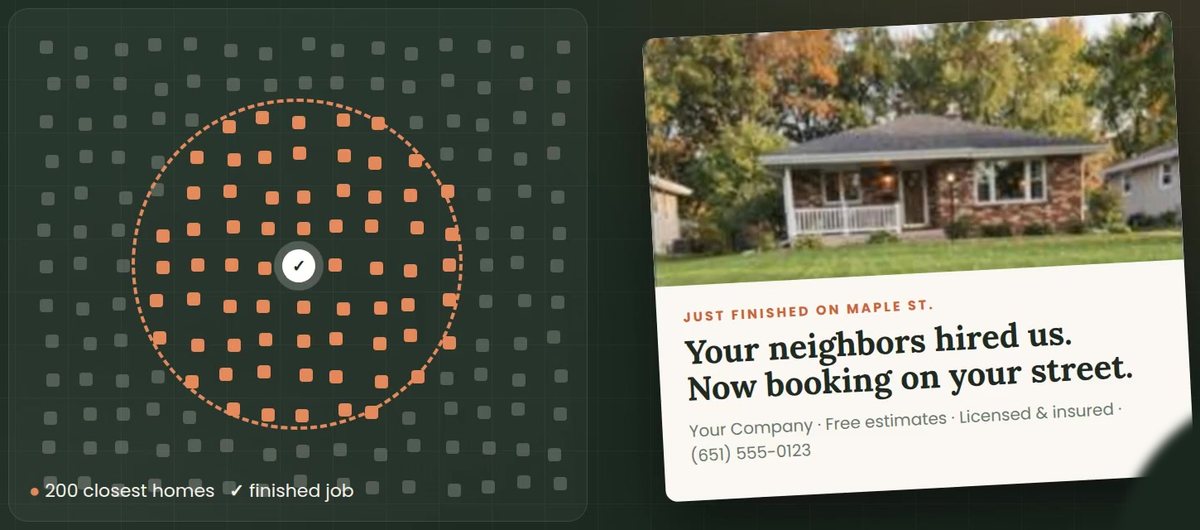
Interior and whole-home projects fill the cold months. Postcards go to the streets around each finished job, and Emma pushes winter interior work while exterior jobs wrap.
Frost depth and permit backlogs set your calendar. A builder in Duluth and a builder in Dallas pour footings in different months, and Emma plans around yours.
Invoca found that only about half of home-services calls reach a live person. Front Desk answers the calls you can’t, on your number or a new local one, asks your scope and budget questions, pre-schedules a site walk and texts the whole thing to you.
Example call. Front Desk follows the rules you give it.
97% of consumers read reviews for local businesses, and 45% have asked ChatGPT or a similar tool for a recommendation. Before anyone hands a GC their house, they look for finished projects, recent reviews and proof you pull permits.


Tell Emma about your company and the site is up in about 5 minutes. Text her to change it: “Add the Birch Court addition to the project gallery.”
Three shifts that show up in GC estimates and homeowner conversations this year. Put the right answers on your site and in your phone screening, and you sound like the builder who has done the math.
For context: in NAHB’s Q2 2026 survey, 74% of remodelers said suppliers had raised material prices since March, by 6.7% on average. Confirm current pricing with your yard before you hold a bid open. [7]
The BLS projects about 62,800 carpenter openings a year, with a median wage of $60,580 in May 2025. Construction managers, the job most lead carpenters grow into, earned a median $114,990 with about 49,700 openings a year. ABC estimates the industry needs 349,000 more workers this year. [8] [9] [3]

Call or text one number. Emma, your AI agent, runs your website, your ads, your phones and your hiring, set up for your general contracting company.
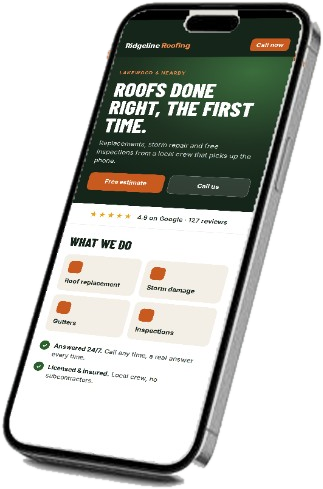
Additions, whole-home remodels and project photos laid out the way homeowners compare builders.
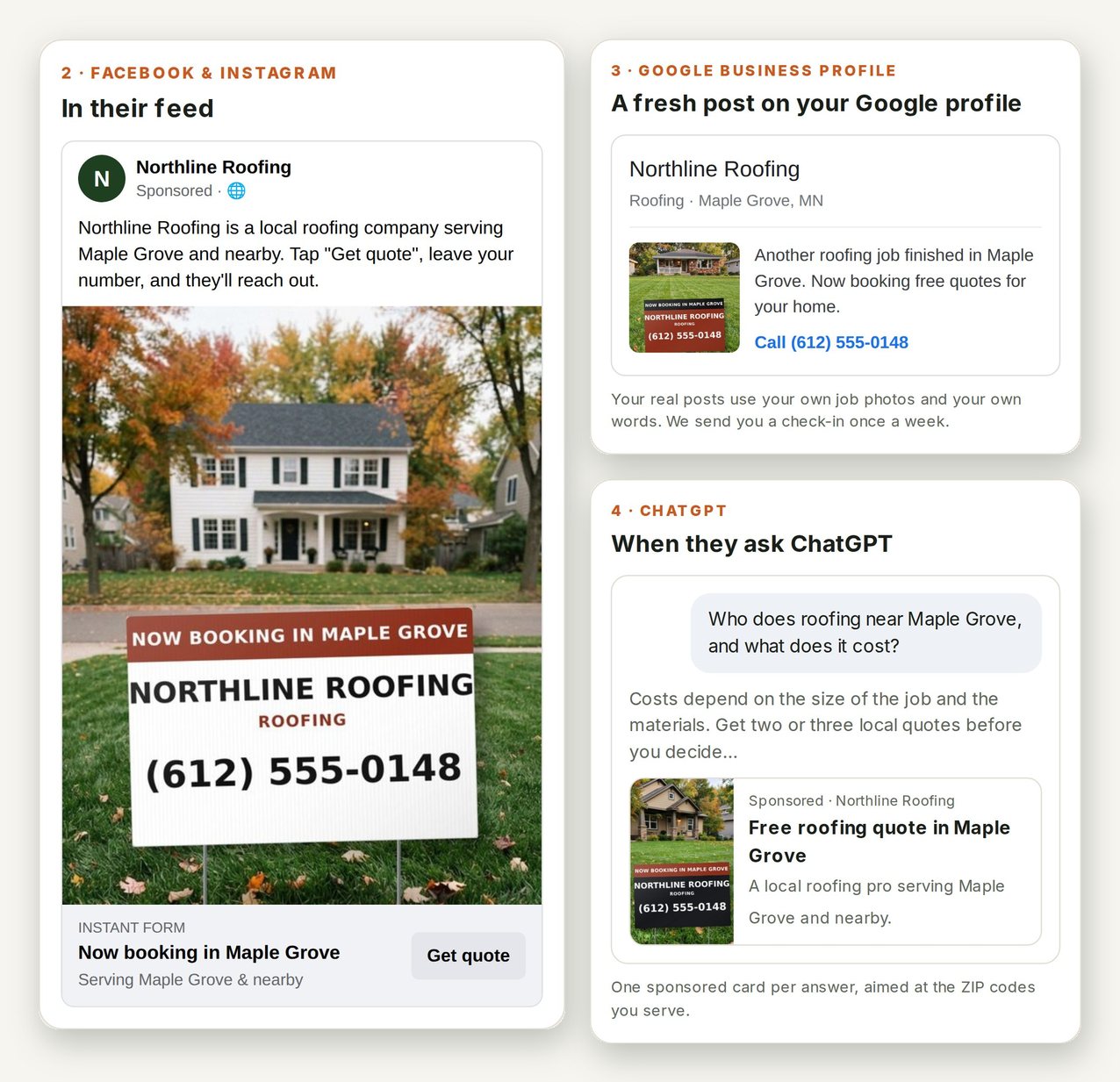
Addition ads before bid season, review requests at final walkthrough, postcards around active jobs.
Screens bid requests by scope and budget, flags storm and structural calls, pre-schedules site walks.
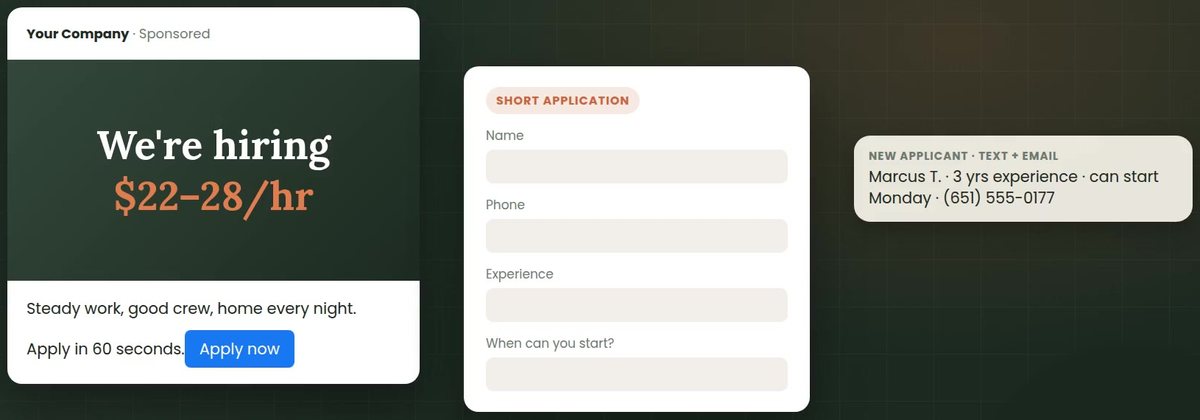
A carpenter and lead carpenter job ad near you, every applicant sent to your phone.

Example conversation.
How small residential builders win additions, second stories and whole-home projects: what the website needs to prove, where to spend on marketing, and how to qualify and close on the phone. Written for GC owners running 1 to 25 people.
On this page: Website · Marketing & ads · Phone calls · FAQ · Sources
One page per project beats one crowded gallery. Give each a title like “Two-story addition, Maple Grove,” then show the before, framing and finished photos, the scope in two sentences, and how long it took. Homeowners comparing builders want proof you’ve done their kind of job, and search engines match those pages to searches for that kind of project.
Write separate pages for additions, second-story additions, garage builds, whole-home remodels and design-build. On each, explain who draws the plans, who pulls the permit, what a typical timeline looks like and what drives cost. A page that says “we do it all” ranks for nothing and reassures no one.
Lay out the steps in plain order: first call, site walk, design or plans, written bid, contract, permit, start. Say whether you charge for design or detailed estimates, and how you handle allowances and change orders. Owners spending six figures are scared of surprises, and a clear process page answers the questions they’re afraid to ask.
Show your state license number in the footer, name your insurance coverage, and say plainly that you pull permits on every job. Add any builder association memberships you hold. These are the first things a careful homeowner checks, and the first things a lender or an architect asks about when they refer you.
Ask for project type, rough size, whether plans exist, target start and budget range, plus a phone number. Keep it short enough to finish on a phone. Make your number tap-to-call in the header of every page, because plenty of addition leads would rather talk than type.

Choosing who builds it? 18 website options compared, with first-year costs and who owns the site.
General contractors are the construction pros homeowners hire most, used by 29% of renovators in the 2026 Houzz & Home Study [5]. Keep your Houzz profile and Google Business Profile current with the same project photos, service list and service towns. Post a finished project to both every time you close one out.
Big jobs are few, so each review counts. Ask in person at final walkthrough, then text the link that evening. BrightLocal’s 2026 survey found 47% of consumers won’t use a business with fewer than 20 reviews [2], so ask on small jobs and warranty visits too. Outfitter’s Website Professional plan can send the request automatically.
Homeowners plan winter-to-spring for summer builds. Start Facebook and Instagram ads in January with real photos of your additions and second stories, aimed at the towns and home ages you want to work in. Big projects are slower to sign right now: NAHB’s index for $50,000-plus remodels slipped to 64 in Q2 2026 [7], so start earlier, not later.
A yard sign with your name and number on every permitted job is the cheapest ad you’ll buy. Mail or hand a note to the neighbors when you break ground, apologizing for the noise and inviting them to watch. Neighbors of an addition are often thinking about one.
Many additions start at an architect’s or designer’s desk, and many whole-home remodels start with a realtor. Show up with a one-page project sheet, bid their plans on time, and send a thank-you when a referral signs. One steady architect can fill a season.
Track where every bid request came from, how many became site walks, and how many signed. A cheap lead that never buys costs more than a pricey one that signs a midrange primary suite addition, which averaged $170,517 nationally in 2025 [4]. Cut channels that send tire-kickers, even if they send a lot of them.
Choosing where to spend? 26 marketing options compared, including which leads are shared with other contractors.
Homeowners planning an addition call several builders, and the first one to set a site walk usually gets the bid. Invoca’s 2026 data shows only 52% of home-services calls reach a person [1]. If you’re on a roof, have someone answer; Outfitter’s Front Desk can take the call and text you the details.
Ask what they want built, roughly how big, whether they have plans or an architect, when they hope to start and what range they’ve set aside. If the budget is a third of what the job costs, say so kindly now. A site walk with an unqualified lead costs you half a day.
Don’t finish with “I’ll call you back.” Offer two specific times to walk the property, and ask both decision-makers to be there. Confirm by text with your name, the address and what to have ready, like a survey, old plans or photos of the area.
Homeowners need a ballpark to know whether to keep talking. Share what similar projects of yours have cost, and explain what moves the number up or down, such as foundation work, rooflines and finish level. Never promise a figure before you’ve seen the site and the plans.
Call or text a few days after the bid goes out, then again at two weeks. Ask what questions came up, not “did you decide?” In ServiceTitan’s 2025 survey, following up on unsold estimates brought in new revenue for 42% of businesses that said they were surviving [13].
Choosing an answering service? What it should ask and which ones fit this trade, from live answering to AI.
Answer the ones you already get. Invoca’s 2026 data shows only about half of home-services calls reach a person, and a homeowner planning an addition usually calls three builders. The one who picks up and sets a site walk is ahead.
Then show your work: a website with real project photos and the towns you build in, recent Google reviews from finished jobs, and ads for additions and whole-home work running before bid season.
If you miss calls while you’re on site, usually yes. Front Desk costs 35 cents a minute from your token balance, so $35 covers about 100 minutes. The 2025 Cost vs Value report puts a midrange primary suite addition at $170,517, so one addition lead caught pays for years of answering.
Yes. You tell it what to ask: type of project, rough square footage, whether plans are drawn, budget range and target start. It texts you the answers and pre-schedules a site walk for you to confirm.
It never gives a ballpark price or a start date unless you told it to.
Yes. Every bid call opens with Front Desk saying it’s an AI assistant. Pick a natural voice, or your own voice cloned only from a recording you make yourself. No homeowner is misled about who is on the line.
Yes. In ServiceTitan’s 2025 trades survey, following up on unsold estimates brought in new revenue for 42% of businesses that called themselves surviving and 39% of those thriving. A text or call a week after the bid goes out costs almost nothing.
When those homeowners call back with questions, Front Desk answers, takes the message and texts it to you.
Yes. Directory profiles show your rating. Your own website shows your process, your license, your project gallery and your service area, which is what a homeowner checks before handing over a six-figure job, and what AI tools read when they recommend builders.
Ask at every final walkthrough, and ask on smaller jobs too. BrightLocal’s 2026 survey found 47% of consumers won’t use a business with fewer than 20 reviews, and 74% look for reviews from the last three months. With Website Professional, Emma sends the request automatically.
Front Desk marks storm damage, structural problems and water coming in as urgent and texts and emails you right away with the address and what the caller described. You decide whether to send a crew to tarp or board up.
It won’t promise a crew tonight unless you’ve told it to.
Pick a monthly number and judge it by signed contracts, not clicks. With Outfitter you set the ad spend and can change it any time. Ad spend is billed at cost plus 30%, your first $10 of Facebook ads costs nothing, and no contract ties you to it through a slow bid season.
Be specific. Since October 14, 2025, imported softwood lumber has carried a 10% tariff and kitchen cabinets and vanities 25%, with the cabinet increase to 50% delayed to January 1, 2027. NAHB’s Q2 2026 survey found 74% of remodelers saw supplier price increases since March.
Explain how your contract handles allowances and price changes, and keep bid validity windows short.
Put the pay range and schedule in the ad and say what the work is: framing, finish, or both. The BLS projects about 62,800 carpenter openings a year, and ABC says construction needs 349,000 new workers in 2026, so vague postings get ignored. Emma runs your ad on Facebook and Instagram and sends every applicant to your phone.
It depends on your state, and sometimes your city or county. Check your state contractor board for license, insurance and bond rules before you advertise in a new area. Then put your license number on your website; homeowners and AI tools both look for it.
Growth is flattening. Harvard’s Joint Center projects $519 billion in home improvement spending through mid-2027, with growth near 0.5%. NAHB’s index for $50,000-plus projects slipped to 64 in Q2 2026 while small jobs held at 74. Big projects still happen, but homeowners take longer to commit, so answering fast and following up matters more.
No. It works alongside whatever you use for estimating, scheduling or job costing. Every call, inquiry and applicant comes to you by text and email.
Yes. The basic site sits at getoutfitter.ai/site/your-name with a small Outfitter banner and stays free. Website Professional, at $79 a month, puts it on your own domain, drops the banner and automates Google review requests and posts; the first 30 days cost nothing and you can cancel any month. Your business data, including every bid inquiry, stays yours.
Figures on this page come from these reports. Vendor research is labeled as such; government sources are primary.
Start with a website that shows the projects you build, up in about 5 minutes. Joining the marketing side costs nothing; you pay for the ads and calls that actually run. Nothing to sign.