Roofing runs on weather. One hailstorm fills the phone for weeks, and a dry spell leaves the crews idle. Homeowners are also wary after every round of door-knockers. Outfitter gives your company a roofing website that shows you’re local, an AI Front Desk that catches leak calls while you’re up on a pitch, and local ads and Google reviews that Emma, your AI agent, runs for you.
Call or text Emma the way you’d talk to an office manager. She does the rest.
Asks your questions, offers the homeowner a time and texts you the details to confirm.
Built for your trade in about five minutes, from what already wins work.
Six numbers worth knowing before you spend on another storm-lead list. Each is sourced at the bottom of the page.
Hail and wind bring bursts of inspection requests, summer and fall carry the installs, and winter slows tear-offs in cold climates. Emma lines up your ads, postcards and hiring with that cycle so the crews have work lined up when the weather breaks.
Storm-damage inspection ads go live in the zip codes that got hit. Front Desk takes the flood of calls after a storm and pre-schedules inspections for you to confirm. Hiring ads run before the crews get stretched.
Full replacements and insurance jobs move through production. A review request goes out at every final walkthrough, and postcards hit the homes around each finished tear-off.
“Get it done before winter” ads and follow-ups on open estimates. Gutter and ventilation add-ons. Homeowners who waited all summer finally sign.
Front Desk answers ice-dam and active-leak calls and flags them for tarping. Repair work keeps a crew moving, and inspection ads build a spring pipeline.
Hail country, hurricane coast and snow belt all run different roofing calendars. A Dallas roofer and a Minneapolis roofer don’t sell the same months, and Emma plans for where you work.
After a storm, calls pile up while you’re on roofs doing inspections. Front Desk answers on your number or a new local one, asks about the damage and the insurance claim, pre-schedules an inspection for you to confirm and texts you each one.
Example call. Front Desk follows the rules you give it.
Every hailstorm brings out-of-town crews and door-knockers, and homeowners know it. They check the map, the stars and the dates before they let anyone on the roof. In Scorpion’s 2026 survey, 67% of home-service business leaders said they struggle to collect reviews consistently.


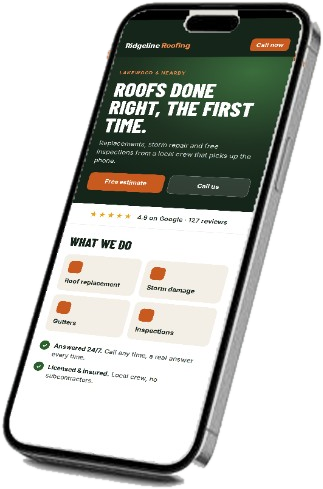
Tell Emma about your company and a roofing site is live in about 5 minutes. Text her to change it: “Add a storm inspection banner for the north side.”
Three changes affecting residential roofing sales this year. Get them right on your website and in your phone answers, and homeowners hear a roofer who knows the business.
Where demand stands: in NRCA’s July 2026 survey, 30% of roofing contractors reported no project backlog and 13% had five months or more. Check local code, permits and your supplier before you quote. [1]
BLS projects about 12,000 roofer openings a year through 2035 and put the median wage at $55,440 in May 2025. The work is physical and outdoors, and most employers require OSHA safety training. Fall protection in construction was OSHA’s most-cited standard again in fiscal 2025. [6] [9]

Call or text one number. Emma, your AI agent, runs your website, your ads, your phones and your hiring, set up for your roofing company.
Replacements, storm damage, repairs and insurance help, laid out the way homeowners look for a roofer.
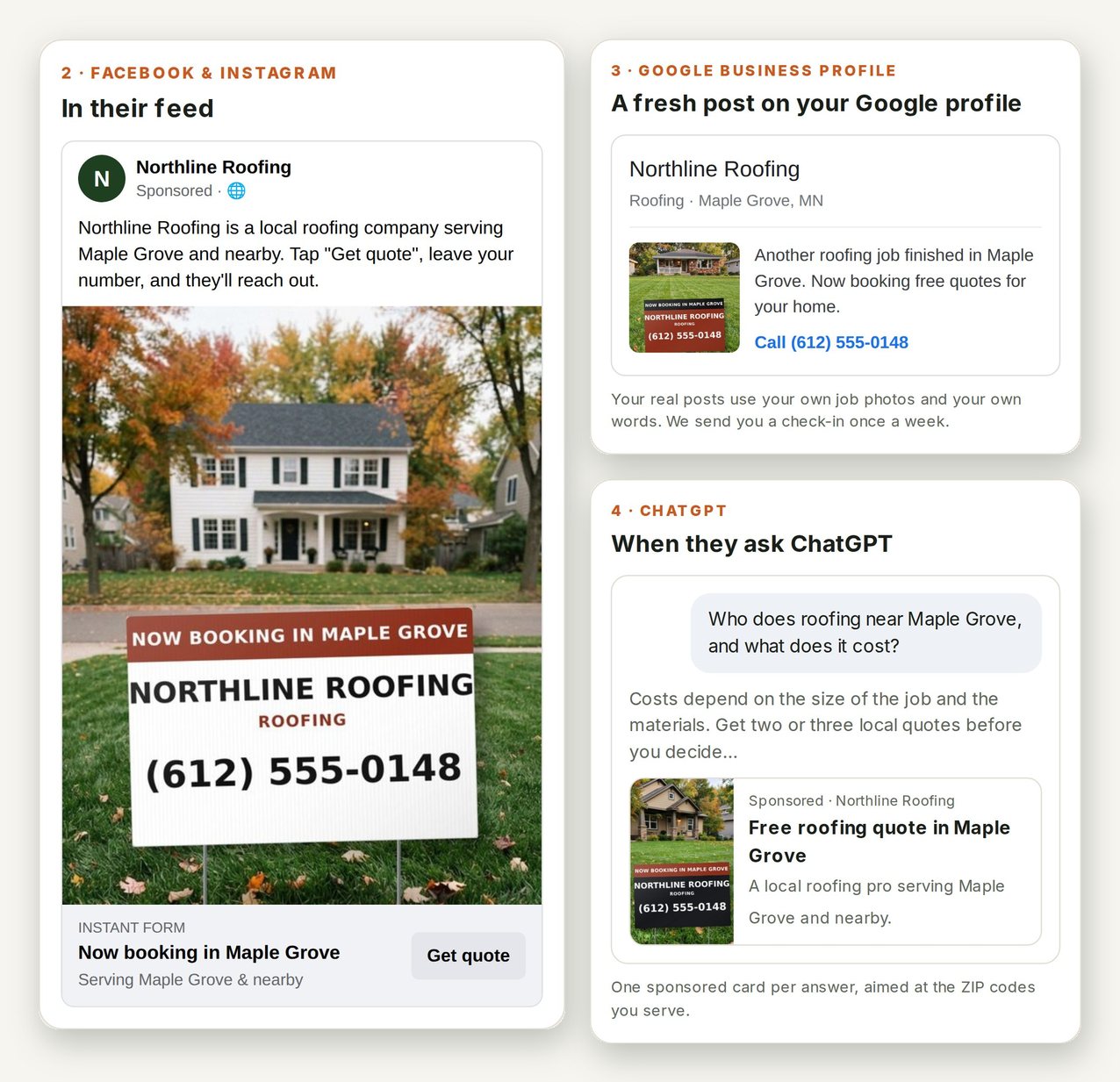
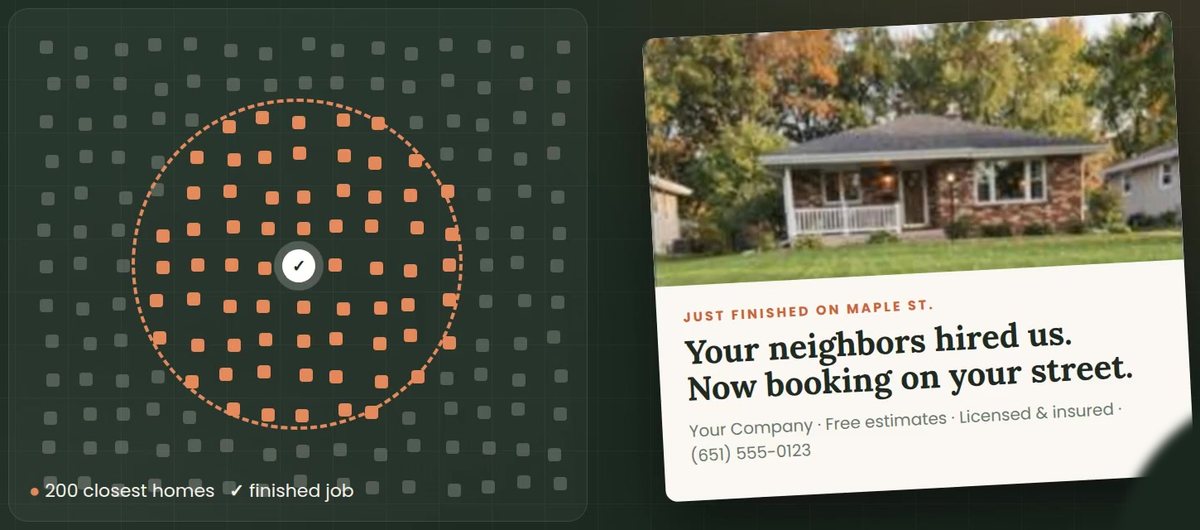
Storm inspection ads in hit zip codes, a review ask at every walkthrough, postcards around each tear-off.
Catches the post-storm call rush, flags active leaks urgent, and pre-schedules inspections for your OK.
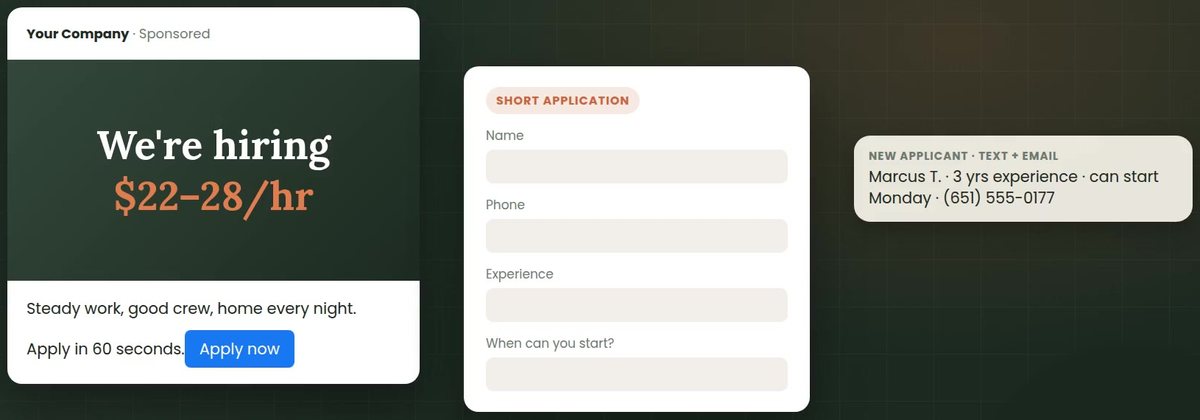
A job ad for roofers, laborers and foremen near you, with every applicant sent to your phone.

Example conversation.
A hands-on guide for residential roofing owners: how to build a website that beats storm chasers, where to spend on ads and mail, and how to handle storm-week calls, inspections and insurance questions until the contract is signed.
On this page: Website · Marketing & ads · Phone calls · FAQ · Sources
Separate pages rank and convert better than one services list. Cover full replacement, leak repair, hail and wind damage, insurance claim help, metal roofing, gutters and attic ventilation. On the storm page, explain what an inspection includes and what happens between the inspection and the adjuster visit.
After every hailstorm, out-of-town crews flood the area, and homeowners know it. Show your street address, years in business, state license or registration where it applies, insurance, and manufacturer certifications you actually hold. Spell out your workmanship warranty in plain words. Local proof is the line between you and a storm chaser.
Post before-and-after drone shots, close-ups of hail bruising and lifted shingles, and photos of tarps, magnet sweeps and a clean yard at the end. Caption each with the town, the material and the number of squares. Real job photos convince a cautious homeowner faster than any headline.
Many homeowners don’t know their policy may pay an older roof at depreciated value. ZestyAI found 75% of carriers in storm-exposed states use actual-cash-value roof schedules and 49% exclude cosmetic damage [4]. Explain inspection, claim, adjuster meeting and scope in plain steps, and never promise the insurer will pay for a new roof.
Put “Book a roof inspection” at the top of every page with a short form for address, roof age, the storm date and photos of any interior stains. Add tap-to-call for phones. After a storm, the roofer who confirms an inspection fastest usually ends up on the roof first.
Choosing who builds it? 18 website options compared, with first-year costs and who owns the site.
Use “Roofing contractor” as your primary category, list each service, and post finished-job photos every week, not just after hail. Add your real service area and hours. When a storm hits, a profile with recent posts and fresh photos looks like an established local business, not a crew that just arrived.
Roofing customers buy once every couple of decades, so you can’t count on repeat business to keep reviews fresh. Ask on site when the yard is clean, then send a link the same day. BrightLocal found 68% of consumers need at least four stars [5]. Answer each review in your own words; templated replies put people off.
Google is moving roofing Local Services Ads into Performance Max starting August 2026 [8], and LSA requires license or registration checks before ads go live [11]. For search and social ads, target only the zip codes that took the storm and run them for a few weeks after. Bid on “hail damage roof inspection” and “roof leak repair,” not just “roofer.”
A new roof is the best ad on the street. After each tear-off, send postcards or door hangers to the homes around it with a photo of the finished job and an inspection offer. Outfitter’s postcards cost about 53 cents delivered. Neighbors with roofs the same age are your warmest prospects.
NRCA’s Q2 2026 survey put the steep-slope reroofing inquiry index at 31.8, well under the 50 line that signals growth [1]. Don’t rely on the next storm. Work referral programs with past customers, realtors and home inspectors, and follow up on every inspection that didn’t turn into a contract.
HomeAdvisor puts the average replacement at $9,609 [3], so a channel that costs a lot per lead can still pay if it signs. Track each lead source from inspection to contract to completed roof. With shingle prices up 6% to 9% on June 1, 2026 [7], check margins on every source too.

Choosing where to spend? 26 marketing options compared, including which leads are shared with other contractors.
Wind and hail drove 42.5% of homeowners insurance losses in 2023 [2], and the calls come all at once. While your team is up on roofs inspecting, the office phone is where jobs are won or lost. Add a second person, an answering service or an AI receptionist for storm weeks, and call back within minutes.
Ask whether water is coming in right now, which storm caused the damage, roughly how old the roof is, how many stories the house has, and whether they’ve opened a claim and when the adjuster visits. Active leaks get a tarp first. Claim and adjuster dates tell you when to schedule the inspection.
Offer two inspection times on the call, confirm the address and text a reminder. If a claim is open, offer to be there for the adjuster meeting. In Scorpion’s 2026 survey, 66% of home-service businesses called after-hours service a top challenge [10]. Covering evening calls after a storm is where you get ahead.
Don’t quote a roof over the phone. Explain how you price (by the square, plus tear-off, decking and flashing as needed) and that the inspection sets the scope. On insurance jobs, tell homeowners their deductible is theirs to pay and their policy decides what’s covered. Honest answers protect your reputation and your license.
Roof sales often take more than one conversation, especially after the adjuster visit or when a spouse weighs in. Follow up within a couple of days, again after the adjuster meeting, and before your price goes up. Outfitter’s Front Desk takes the callback when they’re ready and texts it to you.
Choosing an answering service? What it should ask and which ones fit this trade, from live answering to AI.
Answer the calls you already get, especially in the days after a storm when everyone calls at once. Then make it obvious you’re the local, established roofer: a steady flow of recent reviews, a website with your service towns and years in business, and postcards around every roof you finish.
Outfitter’s basic website is free, and you pay only for the ads and the answered calls that actually run.
Front Desk is 35 cents a minute from your token balance, with no contract, so you only pay when it’s actually answering, like the week after a hailstorm. HomeAdvisor puts the average roof replacement at $9,609 in 2026, so one inspection you’d have missed covers a long run of calls.
It answers, asks whether water is coming in right now, and marks active leaks urgent so you can send someone with a tarp. It texts you the address and details immediately.
It never promises a crew tonight, a start date or a price unless you’ve told it to. You can also have it give your standard advice, like moving belongings and putting a bucket under the drip.
Yes. Every call opens with Front Desk saying it’s an AI assistant. It can use a natural voice or your own, cloned only from a recording you make, and it never claims to be a person.
Look local and answer fast. Homeowners are wary of out-of-town crews, so your website should show your address, service towns and years in business, and your reviews should be recent. BrightLocal’s 2026 survey found 68% of consumers want at least a 4-star rating. Run storm inspection ads only in the zip codes that were hit, and make sure every call gets answered while your crews are on roofs.
Yes. The profile puts you on the map. The website is where a cautious homeowner checks your materials, warranties you offer, insurance claim help and service area before letting you on the roof. AI tools read it too. Yours can be up in about 5 minutes.
Ask at the final walkthrough, when the yard is clean and the homeowner is happy. Roofing jobs are infrequent, so you can’t count on repeat customers to keep reviews fresh. Emma sends a request after every job, and Website Professional automates it with your Google profile.
They can be, since you pay per lead. Google says roofing is in the first group of U.S. Local Services categories moving into Performance Max starting in August 2026, so expect your setup and reporting to change. Your reviews and website work either way.
Tell them to read their policy before the storm, not after. In ZestyAI’s review of insurer filings, 75% of about 60 carriers in storm-exposed states use actual-cash-value roof schedules and 49% exclude cosmetic damage, so an older roof may be paid at depreciated value. Teach Front Desk to ask about the roof’s age and whether a claim is open, and you’ll know what you’re walking into.
Materials. GAF raised prices 6% to 9% on shingles and accessories for orders shipped from June 1, 2026, and steel and aluminum imports have carried a 50% tariff since June 2025. Put an expiration date on estimates and keep fixed prices off your website.
Lean on repairs, ice-dam and leak calls, and build next season’s list. Run inspection ads in late winter, follow up on every open estimate, and send postcards around the jobs you finished in the fall. In NRCA’s July 2026 survey, 30% of roofing contractors had no project backlog, so the pipeline you build in the slow months matters.
Put the pay, piece rate or hourly, and the schedule in the ad, and say you provide fall-protection training. BLS projects about 12,000 roofer openings a year, and fall protection in construction was the standard OSHA cited most in fiscal 2025. Emma posts the roofing job on Facebook and Instagram and texts you every applicant.
It runs alongside them. Calls, inspection requests and job applicants reach you by text and email, so you can enter them into whatever CRM or production software you use.
None. The starter site stays free, hosted at getoutfitter.ai/site/your-name under a small banner. Website Professional is $79 a month for your own web address, no banner, and automated Google review requests and posts, with 30 days free and no contract. You own your business data.
Figures on this page come from these reports. Vendor research is labeled as such; government sources are primary.
Start with your roofing website. It’s live in about 5 minutes. Joining marketing costs nothing, and you pay only for what runs. No contracts.