For pest control operators

Every swarmer call answered. Every one-time treatment pitched a quarterly plan.

Pest calls come in bursts: termites swarming on the first warm spring day, wasps under the deck in August, mice in the walls the week it turns cold. You’re usually under a house when they ring. Outfitter gives your pest control company a website built for the trade, an AI Front Desk that answers the calls you miss, and local ads and Google reviews run by Emma, your AI agent.

Built for how pest control actually runs
Termite swarmer calls flagged Quarterly plan sign-ups captured Mosquito season ads Rodent calls screened Review ask after every service Licensed tech hiring ads No contracts
Example owner of a local pest control company

One agent.No logins.

Call or text Emma the way you’d talk to an office manager. She does the rest.

01

Answers every call

EmmaAvailable 24/7

Asks your questions, offers the homeowner a time and texts you the details to confirm.

02

Free website

Built for your trade in about five minutes, from what already wins work.

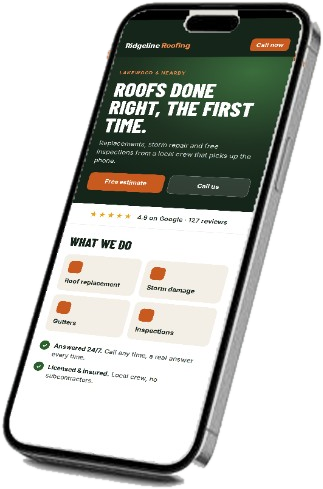
A free Outfitter website on a phone
03

Ads, done for you

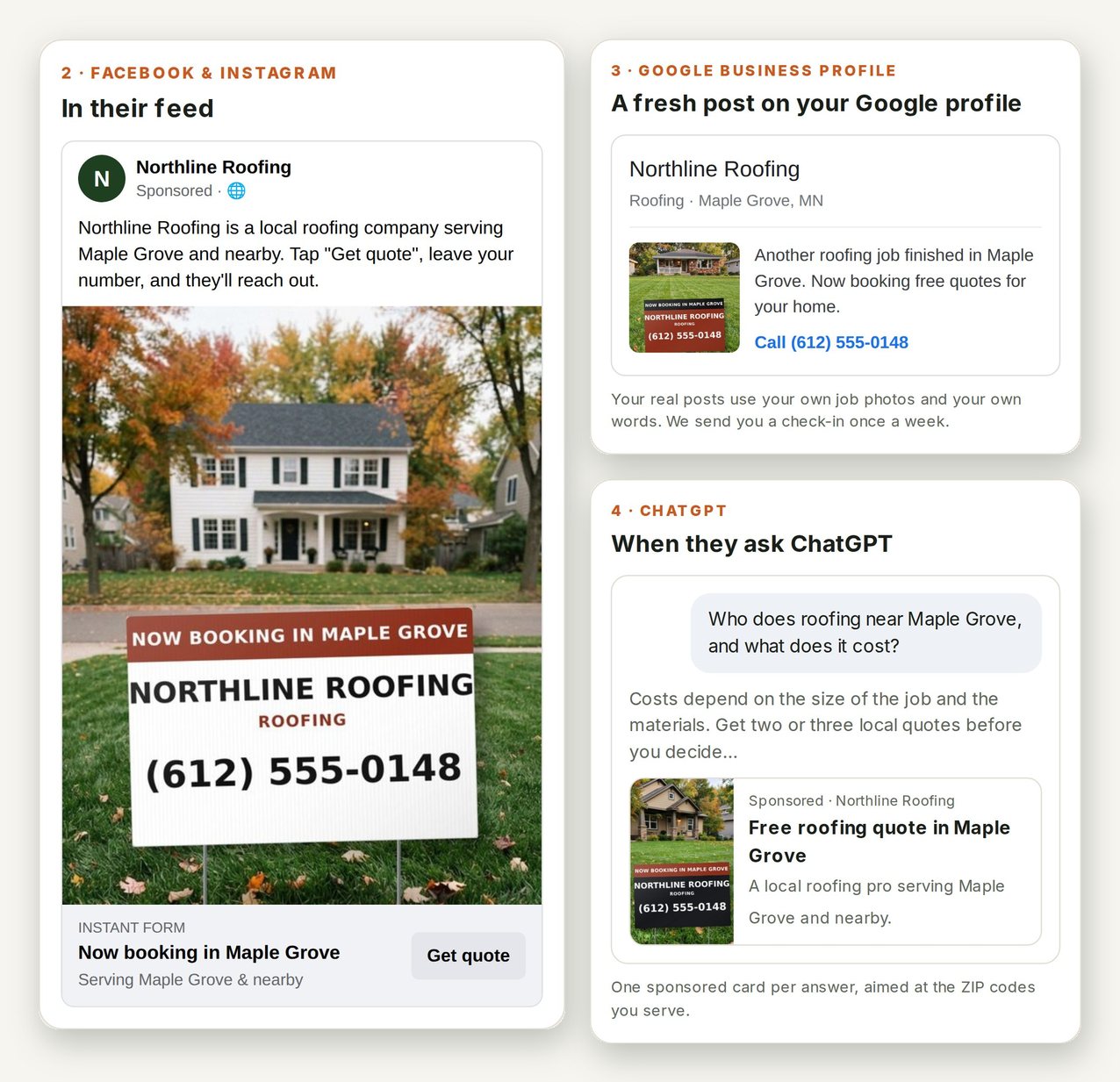
  • Facebook & Instagram
  • Google Business
  • Direct mail postcards
  • ChatGPTComing November
Pest control by the numbers · 2025–2026

What the data says about winning pest work this year.

Six numbers to know before you buy more leads or another truck wrap. Each links to its source at the bottom of the page.

$172
average pest control visit
Quarterly service visits typically run $100 to $300, and an inspection costs $125 to $450. A recurring plan is worth far more than one spray.
Angi, 2026 [1]
96%
of pest companies treated rodents last year
Rodents made up 14.6% of all pest calls. Only 11% of homeowners call before they hear scratching or find droppings.
NPMA, 2025 [2]
$6.8B
in termite damage every year
Yet only 31% of homeowners know the common signs, and just 23% call for a preventive termite inspection. That gap is your marketing.
NPMA, 2025 [3] [2]
90%
of pros get “bed bug” calls that aren’t
Carpet beetles are the usual culprit. Good questions on the first call save a wasted trip.
NPMA, 2025 [2]
13,700
pest control job openings a year
Projected yearly through 2035, with employment growing 6%. Most states also require a license, so finding a qualified tech takes time.
U.S. Bureau of Labor Statistics [4]
52%
of home-service calls reach a person
Invoca’s call study covered pest control among nine home-service groups. Roughly half of callers get a live answer. The other half are open to whoever picks up.
Invoca, 2026 [5]
The pest control year

The bugs set the calendar. Your ads should be a step ahead.

Pest calls follow temperature and rain: swarmers in spring, stinging insects and mosquitoes in summer, rodents moving indoors in fall. Emma times your ads to each wave and pushes every one-time caller toward a quarterly plan.

Spring · Mar–May

Swarm season. Be the first call.

Termite inspection ads go out ahead of the first warm, humid days, and NPMA’s Termite Awareness Week in early March gives you a reason to post. Front Desk asks whether the bugs have wings and where they showed up, then marks it urgent.

Summer · Jun–Aug

Mosquitoes, wasps and ants, all at once.

Backyard mosquito service ads before July cookouts. Front Desk screens wasp nest and fire ant calls, and a review request goes out after every service.

Fall · Sep–Nov

Rodents move in. Sell exclusion.

Rodent and exclusion ads go out as nights get cold. Postcards go to neighborhoods with older homes, and quarterly plan renewals go to last year’s customers.

Winter · Dec–Feb

Lock in next year’s plans.

Rodent and bed bug calls keep coming. Annual-plan offers go to one-time customers, and hiring ads run now so new techs can study for the license exam before spring.

Pest season shifts with latitude. A Gulf Coast company sprays most of the year, while one in the upper Midwest packs its season into a few months. Emma builds the calendar from where you actually work.

Front Desk · answers 24/7

A swarmer call is a termite job. Or the start of someone else’s plan.

Only about half of the calls to home-service companies get a live answer, and a homeowner who just found winged insects on the windowsill keeps dialing until someone does. Front Desk answers when you’re in an attic or crawlspace, asks your questions, pre-schedules an inspection and texts you the details.

How it handles a pest call
  • Tells every caller it’s an AI assistant before anything else, in your voice or a natural one
  • Asks what you’d ask: what pest, where they saw it, how many, kids or pets in the home
  • Marks swarmers, stinging insects near doors and rodents in living spaces urgent and texts you
  • Pre-schedules an inspection or treatment for you to confirm
  • Never quotes a treatment price or names a product unless you told it to
  • 35¢ a minute from your tokens. Setting it up and changing it are free.

How Front Desk works →

Example call. Front Desk follows the rules you give it.

Website

A pest control website that sells the plan, not just the spray.

Tell Emma about your company and your site is live in about 5 minutes. Update it by text: “Put the mosquito season package on the home page.”

Built for pest control from the first page
  • General pest, termites, rodents and exclusion, mosquitoes, bed bugs and quarterly plans, each with its own section
  • Your license number, service area and phone number easy to find on a phone
  • Requests sent to your email, plus live AI appointment booking
  • Live at getoutfitter.ai/site/your-name from day one. Professional ($79/mo) adds your own web address, no banner, and Google reviews and posts.
getoutfitter.ai/site/your-name
Example site for a made-up pest control company. The one you get is built around your own services and territory.
What changed in 2025–2026

Rodenticides, mosquito permits, Google leads. Know what’s coming.

Three changes pest control owners should know about this year, in plain English. Customers and inspectors both ask, and the company that can explain them looks like the pro.

Rodenticides
EPA’s rodenticide strategy will change labels
In November 2024 the EPA finalized its endangered-species strategy for 11 rodenticides, including brodifacoum, bromadiolone and bromethalin. It doesn’t change labels by itself. The new limits, like bait station requirements and application method restrictions, arrive product by product as each one goes through registration review. [6]
What to doTell Emma how you handle rodents, like exclusion first and baits where allowed, and your site says it your way.
Mosquito permits
A new EPA pesticide permit starts October 31, 2026
The 2026 Pesticide General Permit replaces the 2021 version on October 31, 2026. It covers mosquito and other flying insect control when pesticide goes into or over water. Operators whose work overlaps protected-species habitat now have to file a notice of intent. [7]
What to doIf you treat ditches, ponds or wetlands for mosquitoes, check whether your state or EPA permit applies before next season.
Google ads
Google is moving pest control Local Services Ads into Performance Max
Pest control is one of the first U.S. categories in the move, starting August 2026. Google says budgets, service types and photos move over automatically, but your old lead reports don’t. [8]
What to doDownload your LSA lead history now. Your website and reviews keep working regardless.

For context: by early September 2025 there were 771 human West Nile virus cases in 39 states, and 42% of pest pros said invasive species problems grew over the past year (NPMA). Follow your product labels and your state lead agency’s rules before you advertise any treatment. [9] [2]

Hiring pest control techs

Licensed techs don’t walk in the door. Recruit before spring.

The BLS counts 108,700 pest control workers, expects about 13,700 openings a year through 2035, and put median pay at $45,250 in May 2025. Most states require a license, which usually means training and an exam, and evening and weekend work is common. Post the job early enough for new hires to get licensed. [4]

What Emma runs for you
  • A Facebook and Instagram job ad near your territory, with pay, route schedule and any commission up front
  • What you need, said plainly: a state applicator license or willingness to get one, a clean driving record, comfort in crawlspaces and attics
  • A short application that works on a phone
  • Every applicant texted and emailed to you
Example hiring ad with the pay in big numbers, a short application, and the applicant texted to the owner
Example hiring ad and pay.
One agent · four jobs

One agent runs the office. You run the routes.

Call or text one number. Emma, your AI agent, runs your website, your ads, your phones and your hiring, set up for your pest control company.

Example conversation.

The pest control growth guide

Websites, ads and phone calls for pest control companies, done right.

How independent pest control companies win work today: what your website needs, where to put ad money through the seasons, and how to handle calls so one-time treatments become quarterly plans. For operators with one truck or twenty.

On this page: Website · Marketing & ads · Phone calls · FAQ · Sources

1

Pest control website best practices

Give every pest you treat its own page

Build separate pages for termites, ants, rodents, mosquitoes, bed bugs, cockroaches and stinging insects. On each, cover the signs homeowners notice, what your treatment involves, how to prepare and how long it takes. Homeowners search by the bug, not by “pest control,” and those pages are what Google and AI tools quote.

Sell the quarterly plan on the home page

Explain your plan in plain words: how many visits a year, which pests are covered, and whether you come back free between visits if bugs return. Quarterly visits typically run $100 to $300 [1], so show what the client gets for it. A plan page with a clear sign-up button outsells a price list.

Put your license and safety answers up front

Most states require pest control workers to be licensed [4]. Show your license number, say who on your team is certified, and answer the questions parents and pet owners ask: what you apply, where, and how long to stay off treated areas. Follow the label and say so.

Show what you actually find

Photos of mud tubes on a foundation, a pile of swarmer wings on a sill, a sealed gap under a garage door, or droppings behind a stove prove you know the work. Before-and-after photos of exclusion jobs sell rodent work better than any slogan. Keep customer addresses out of the shot.

Offer a termite inspection request on every page

Only 31% of homeowners know the common signs of termites [3], so the inspection request is how most termite jobs start. Put a short form or button on every page, ask whether they’ve seen wings or mud tubes, and offer a separate request path for real estate inspections.


Choosing who builds it? 18 website options compared, with first-year costs and who owns the site.

2

Pest control marketing & ads best practices

Time termite ads to swarm season

Swarmers show up on the first warm, humid spring days, and that’s when homeowners panic and search. Have termite inspection ads, posts and postcards ready before then, and use NPMA’s Termite Awareness Week in early March as a hook. Termites cause an estimated $6.8 billion in damage a year [3], so prevention is easy to explain.

Market prevention, not only knockdown

Most people call after they see the problem: only 11% of homeowners call for rodent control before signs appear, and 23% call for a preventive termite inspection [2]. Ads and postcards that teach the early signs and offer a prevention visit reach homeowners before your competitors do.

Ask for a review at the first quarterly visit

Plan customers see your tech four times a year, so you get four chances to ask. Ask after the initial service once the bugs are gone, by text with a direct link. 74% of consumers look for reviews from the last three months [10], so steady quarterly asks keep your profile current.

Mail the neighbors after termite and rodent jobs

Pests don’t stop at the property line. After a termite treatment or a rodent exclusion job, mail the closest homes with a short note and an inspection offer. Outfitter sends postcards to the homes you pick for about 53 cents each, delivered.

Bid on high-intent searches and watch Google’s change

Put ad money on searches like “termite inspection,” “exterminator near me” and “mice in walls” in your service area. Pest control is in the first group of U.S. Local Services Ads moving into Performance Max starting August 2026 [8], so export your lead history and recheck your cost per lead after the switch.

Measure cost per plan customer

A quarterly customer pays you four times a year and often for years, so a lead that becomes a plan is worth far more than a one-time spray. Track which ads and postcards produce plan sign-ups, and put next season’s budget behind those. Send renewal reminders before each plan’s anniversary.

Choosing where to spend? 26 marketing options compared, including which leads are shared with other contractors.

3

Answering and selling on the phone

Be ready for the bursts

Pest calls arrive in waves: swarm days, the first hot week for wasps, the first cold nights for mice. Across home services, only about half of calls reach a live person [5]. On a swarm day the homeowner keeps dialing until someone answers, so have backup coverage for the phone before the season starts.

Identify the pest before you roll a truck

Ask what it looks like, its size, whether it has wings, where in the house it shows up and how many. Ask for a photo by text. 90% of pest pros get “bed bug” calls that turn out to be something else, often carpet beetles [2], and the right questions save a wasted trip.

Separate urgent from routine on the first call

Swarmers inside, stinging insects near a door, and rodents in living or food areas go to the top of the list. Ask about kids, pets and allergies. If someone is having a reaction to stings, tell them to call 911 first. Routine ant or spider calls can wait for the next open slot.

Turn every one-time call into a plan conversation

Before you give a price, explain how the initial service knocks the problem down and the quarterly visits keep it from coming back. Then quote both options. Say clearly whether the plan includes re-service between visits; for many homeowners that’s the deciding question.

Follow up on every inspection the next day

Send the written findings and your proposal right after a termite or rodent inspection, then call the next day to walk through it. Homeowners who saw swarmers often get two or three bids. If they don’t decide, follow up in a week with photos from the inspection.

Choosing an answering service? What it should ask and which ones fit this trade, from live answering to AI.

Pest Control owner questions

Questions pest control owners ask us most.

How do I get more pest control customers?

Answer the burst calls first. Swarmer, wasp and mouse calls come in waves, and a homeowner with bugs on the windowsill calls the next company if you don’t pick up.

Then turn one-time treatments into quarterly plans, keep reviews coming after every visit, and run ads just before each pest season in your area. The Outfitter website is free to launch, and ads and answered calls bill only for what you use.

How much does an AI answering service cost for a pest control company?

Front Desk costs 35 cents a minute from your token balance, so $35 buys about 100 minutes, or around 18 typical calls. A quarterly service visit often runs $100 to $300, so turning one caller into a plan customer covers a long stretch of answering.

Can an AI receptionist handle termite and stinging insect calls?

It answers, asks the questions you set, like whether the insects have wings, where they are and whether anyone is allergic, then marks the call urgent and texts you. You decide when to go out.

It never names a product, quotes a price or promises same-day service unless you told it to. For someone having an allergic reaction to a sting, you can tell it to direct them to call 911 first.

Will customers know they’re talking to an AI?

Yes. Front Desk introduces itself as an AI assistant at the top of every call. You can choose a natural voice, or your own voice cloned only from a recording you make yourself. Nobody is misled about who answered.

Do I need a website if I have a Google Business Profile?

Yes. Your Google profile puts you on the map, but homeowners want to know which pests you treat, whether you offer quarterly plans, what your license number is and whether the treatment is safe around pets. Your website answers all of that, and AI tools read it when they recommend companies. Outfitter builds one in about 5 minutes.

How can a pest control company get more Google reviews?

Ask after every service, including each quarterly visit. 74% of consumers look for reviews from the last three months, and 47% won’t hire a business with fewer than 20, so recurring customers are your best review source. Emma sends the requests for you.

Should a pest control company keep paying for Google Local Services Ads?

They can be, since you pay per lead. But Google named pest control among the first U.S. categories moving from Local Services Ads into Performance Max, starting August 2026. Download your lead history before the switch and expect new reporting.

How much should a pest control company spend on marketing?

Set a monthly budget and judge it by cost per plan customer, since one quarterly customer pays you four times a year. With Outfitter you pick the ad spend and change it whenever you want. Ad spend bills at cost plus 30%, Outfitter covers your first $10 of Facebook ads, and nothing locks you in.

How do I sell more quarterly pest control plans?

Pitch the plan on every one-time call and put it front and center on your website. NPMA found only 11% of homeowners call for rodent control before they see signs, and only 23% call for a preventive termite inspection. Explaining prevention in plain language is how you win plan customers.

How do I market mosquito control services?

Start ads before the first big outdoor weekend in your area, show what’s included per visit, and offer a season package. Mosquito-borne illness news gets homeowners’ attention: by early September 2025 there were 771 human West Nile cases across 39 states. Postcards to streets near ponds and wooded lots work well.

Do pest control techs need a license?

In most states, yes. The BLS notes that most states require pest control workers to be licensed, usually with training and an exam, and rules vary by state and by category such as termite or general pest. Put your license number on your website and in your ads where your state requires it.

What’s changing with rodenticides?

In November 2024 the EPA finalized its strategy to protect endangered species from 11 rodenticides. It doesn’t change labels on its own. New measures, like bait station requirements, will show up on product labels as each rodenticide goes through registration review. Always follow the current label.

How do I hire pest control technicians?

Run the ad before your busy season so new hires have time to get licensed, and spell out pay, schedule and requirements. The BLS projects about 13,700 openings a year for pest control workers. Emma runs your job ad on Facebook and Instagram and sends you every applicant by text and email.

Does Outfitter work with my pest control routing software?

You can keep the software you use. Every call, request and applicant comes to you by text and email, so Outfitter works next to your routing and billing system.

What’s the catch, and who owns my website?

There isn’t one. The free site runs at getoutfitter.ai/site/your-name with a small Outfitter banner. Website Professional, at $79 a month, gives you your own web address, drops the banner and automates Google review requests and posts. You get 30 days free, no contract, and your business data remains yours.

Sources

Figures on this page come from these reports. Vendor research is labeled as such; government sources are primary.

  1. Angi, How much does pest control cost? (2026) (vendor data).
  2. National Pest Management Association (NPMA), Bugs Without Borders survey of 375 pest professionals (spring 2025) (also here) (with the University of Florida).
  3. National Pest Management Association (NPMA), Termite season is here: know the signs of an infestation (March 2025).
  4. U.S. Bureau of Labor Statistics, Occupational Outlook Handbook: Pest control workers.
  5. Invoca, Home Services Lead Conversion Benchmarks Report 2026 (covers nine sub-industries including pest control; vendor research).
  6. U.S. EPA, EPA releases rodenticide strategy, including final biological evaluation of effects of 11 rodenticides (November 2024).
  7. U.S. EPA, Pesticide permitting: 2026 Pesticide General Permit.
  8. Google Ads Help, Local Services Ads migration to Performance Max.
  9. Contagion Live, U.S. West Nile 2025 update: 771 cases across 39 states (CDC ArboNET data as of September 9, 2025).
  10. BrightLocal, Local Consumer Review Survey 2026 (reviews section figures; vendor research).

Get next swarm season’s calls answered.

Start with your pest control website. It’s live in about 5 minutes. Joining marketing is free; you pay for the ads and calls that actually run. No contracts.

Build my Pest Control website → Start my marketing