For water, fire and mold restoration companies

Every 2 am water call answered. More losses on your board.

In restoration the phone rings when the pipe bursts, the storm hits or the smoke clears, and that’s rarely 9 to 5. Outfitter gives your restoration company a website built for water, fire and mold work, an AI Front Desk that takes the emergency calls you can’t, and local ads and Google reviews run by Emma, your AI agent.

Built for how restoration actually runs
Active-water calls flagged urgent 24/7 call answering Claim numbers captured Storm-season ads Review request after every dry-out Tech hiring ads Website live in minutes
Example owner of a local restoration company

One agent.No logins.

Call or text Emma the way you’d talk to an office manager. She does the rest.

01

Answers every call

EmmaAvailable 24/7

Asks your questions, offers the homeowner a time and texts you the details to confirm.

02

Free website

Built for your trade in about five minutes, from what already wins work.

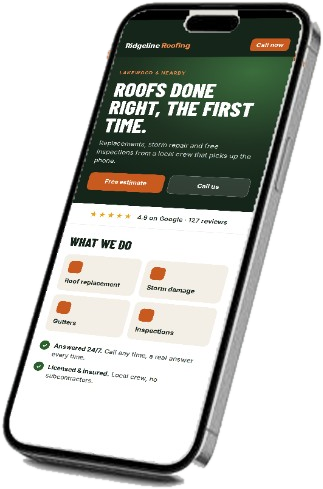
A free Outfitter website on a phone
03

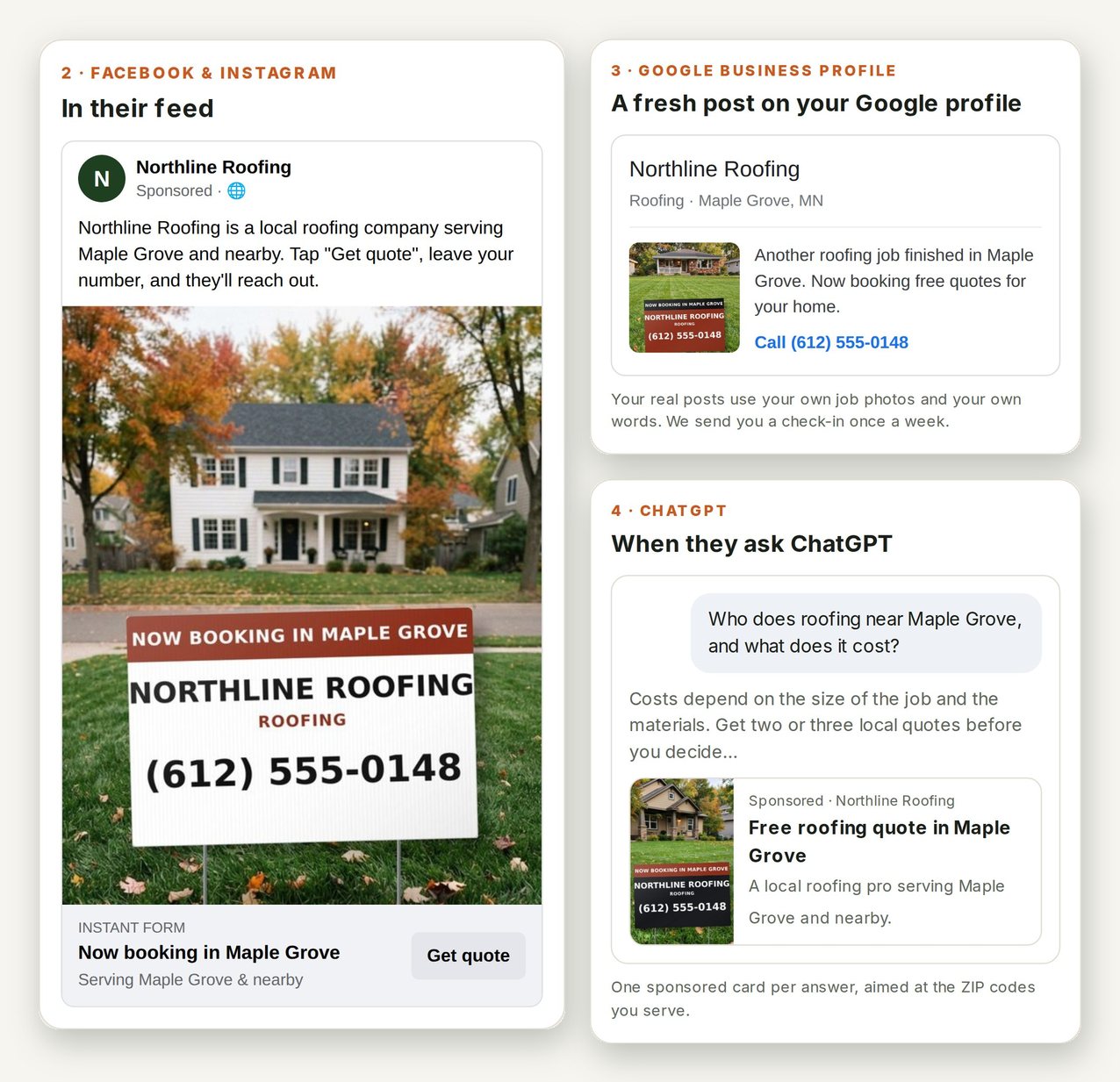
Ads, done for you

  • Facebook & Instagram
  • Google Business
  • Direct mail postcards
  • ChatGPTComing November
Restoration by the numbers · 2025–2026

Before the next storm, know these numbers.

Six figures on losses, prices and catastrophe season. Every one is sourced at the bottom of this page.

$15,400
average paid per water and freezing claim
Homeowners insurers’ average payout per water-damage and freezing claim, 2019–2023. Water and freezing made up 22.6% of all homeowners losses in 2023.
Insurance Information Institute [1]
$88,170
average fire and lightning claim
Fire losses are rare, at 0.23 claims per 100 insured homes a year, but each one is big: structure, contents, smoke, soot and board-up.
Insurance Information Institute [1]
23
billion-dollar disasters in 2025
About $115 billion in direct damage, the third-highest count since 1980 after 2023 and 2024. NOAA stopped updating the count in 2025, and Climate Central now keeps it.
Climate Central; CNN [3] [4]
$3,868
average water damage restoration job
Typical jobs run $1,383 to $6,369. Category 3 black water costs about $7 to $7.50 a square foot to restore, roughly double clean Category 1 water.
HomeAdvisor, 2025 [2]
49,000+
active IICRC-certified technicians
Plus more than 6,500 IICRC Certified Firms. Put your certifications on your website where adjusters, property managers and homeowners can see them.
IICRC [5]
52%
of calls get a live answer
Across home services, only about half of callers reach a person, and 55% of businesses don’t ask for the job. When water is on the floor, a caller who hits voicemail dials the next restoration company.
Invoca, 2026 [8]
The restoration year

Frozen pipes, storms, smoke. Every season has its losses.

Restoration work arrives in waves: frozen pipes in January, basement floods in spring, storms all summer, smoke and mold into fall. Emma plans ads and hiring around your waves so crews stay busy between them.

Winter · Dec–Feb

Frozen pipes and ice dams.

Burst supply lines, ice dams and furnace puff-backs. Front Desk answers at 3 am, marks active water urgent and texts you the address so a crew can roll.

Spring · Mar–May

Basement floods and sewer backups.

Snowmelt, spring rain and backed-up floor drains. Basement water cleanup and sump-failure ads run in low-lying neighborhoods, and postcards go to the streets that flooded last year.

Summer · Jun–Aug

Storm and hurricane season.

Hail, wind, tornadoes and hurricanes bring roof leaks and flooded homes in clusters. Front Desk takes the overflow when every crew is out, and review requests go out as each job dries out.

Fall · Sep–Nov

Late storms, smoke and mold.

Late-season hurricanes, wildfire smoke and the mold that shows up weeks after a summer leak. Hiring ads run now so new techs finish WRT training before the freeze.

Your catastrophe calendar depends on your map. A Gulf Coast shop lives by hurricane season, a Minnesota shop by frozen pipes, and a California shop by wildfire smoke. Emma plans around the losses you actually see.

Front Desk · answers 24/7

A burst pipe at 2 am is an average $3,868 water job. For whoever picks up first.

Water losses don’t wait for business hours, and a homeowner standing in water keeps calling until someone answers. Front Desk takes the calls you can’t, on your number or a new local line, gets the loss details and the insurance information, and texts it all to you.

How it handles a restoration call
  • Says it’s an AI assistant right away, in a natural voice or your own
  • Asks what you’d ask: water, fire, smoke or mold, where it’s coming from, for how long, and whether the source is shut off
  • Takes the insurance carrier and claim number when the caller has them
  • Marks active water, sewage and fire calls urgent and texts you on the spot
  • Never quotes a price, says a loss is covered or commits a crew time unless you told it to
  • 35¢ a minute from your tokens. Setting it up and changing it are free.

How Front Desk works →

Example call. Front Desk follows the rules you give it.

Website

A restoration website that tells homeowners what to do next.

Tell Emma what you handle and where, and the site is up in about 5 minutes. Text her to change anything: “Add sewage backup cleanup to my services.”

Built for restoration from the first page
  • Water mitigation, fire and smoke, mold, storm and sewage cleanup, each named
  • Your service area, IICRC certifications and 24/7 number right at the top of a phone screen
  • Requests sent to your email, with live AI appointment booking for inspections
  • Live at getoutfitter.ai/site/your-name from day one. Professional ($79/mo) adds your own web address, no banner, and Google reviews and posts.
getoutfitter.ai/site/your-name
Example site for a made-up restoration company. Yours is written from what you tell Emma.
New in restoration · 2025–2026

Contract rules, rebuild costs, disaster data. What changed for restoration.

Three changes worth knowing before your next claim conversation, in plain English. Keep your website and phone answers current, and homeowners hear a company that knows the process.

Connecticut
Connecticut rewrote the rules on post-loss assignments
Connecticut lawmakers passed HB 5263 in 2026, effective January 1, 2027. It sets rules for post-loss insurance assignment agreements: a written agreement, a 14-day rescission right and dispute resolution before a lawsuit. Contractors can’t offer to pay deductibles or act as public adjusters. RIA reports that Public Act 26-100 also requires mold remediators to hold active industry certification and follow the ANSI/IICRC S520 standard. [11] [12]
What to doTell Emma your certifications and how you work with insurance, and your site and Front Desk explain it your way.
Rebuild costs
Labor is pushing rebuild prices up
Verisk, the company behind Xactimate, says U.S. residential reconstruction costs rose 3.8% from July 2025 to July 2026. Labor rates climbed 4.7%, more than double the 2.05% rise in materials, and lumber was the only material that got cheaper. [13] [14]
What to doYour phone answers stay out of pricing entirely unless you set them, which leaves line items to you and the adjuster.
Disaster data
NOAA stopped counting billion-dollar disasters
In May 2025 NOAA retired the billion-dollar disaster database it had kept since 1980. Climate Central took it over and counted 23 such disasters in 2025, with about $115 billion in damage. If your website or proposals cite NOAA figures, update the source. [3] [4]
What to doText Emma the new figure and your site is updated.

Coming up: California’s AB 1795 would have the state set smoke-damage standards by June 30, 2027 and certification rules by January 1, 2028. The IICRC S500 water damage standard is in its fifth edition (2021), and a revision is underway. [15] [7]

Hiring restoration techs

Storm season doesn’t wait for new hires. Recruit before the phones light up.

The BLS doesn’t track restoration techs on their own. Its closest category, hazardous materials removal workers, includes mold work and had a median wage of $49,450 in May 2025, with about 4,300 openings a year. IICRC’s Water Damage Restoration Technician certification has no prerequisites, so you can hire for work ethic and train the rest. [10] [6]

What Emma runs for you
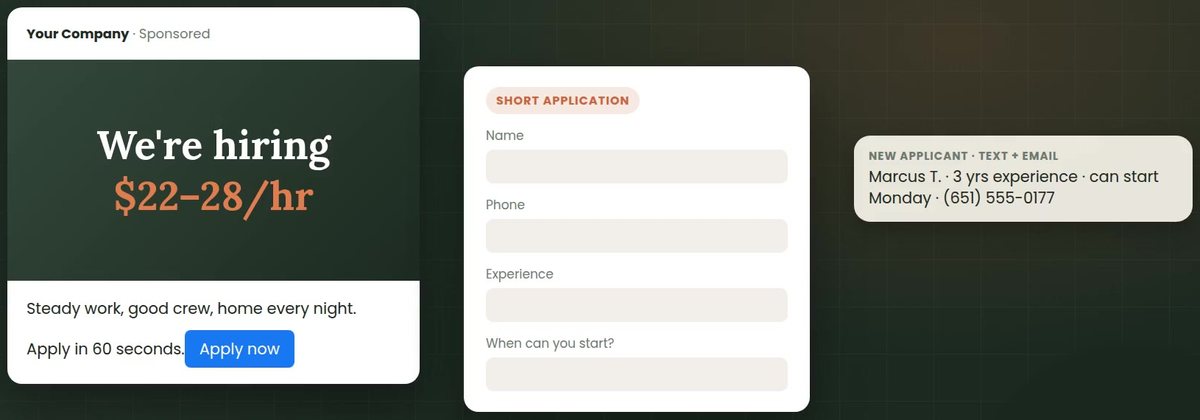
  • A Facebook and Instagram job ad near your shop, with pay, on-call rotation and overtime up front
  • Your requirements in plain words: a driver’s license, comfort in crawlspaces and attics, and willingness to earn IICRC WRT
  • A phone-friendly application that takes a few minutes
  • Every applicant lands in your texts and email
Example hiring ad with the pay in big numbers, a short application, and the applicant texted to the owner
Example hiring ad and pay.
One agent · four jobs

Emma covers the phones and the marketing. Your crews cover the losses.

Call or text one number. Emma, your AI agent, runs your website, your ads, your phones and your hiring, set up for your restoration company.

Example conversation.

The restoration growth guide

How restoration companies win the call, the claim and the review.

A working guide to websites, marketing and phone handling for water, fire, mold and storm restoration companies. It covers homeowner emergencies, insurance and TPA work, and the referral partners who send you jobs.

On this page: Website · Marketing & ads · Phone calls · FAQ · Sources

1

Restoration website best practices

Build separate pages for each loss type

Water mitigation, sewage cleanup, fire and smoke, mold remediation, storm damage and contents cleaning each need a page. Explain what happens in the first hours, what equipment you bring, and what the homeowner should do right now, like shutting off the main. People searching mid-loss want a plan, and Google needs a separate page to match each search.

Put your 24/7 number and dispatch promise up top

Show a tap-to-call emergency number in the header of every page, with a plain statement of when you answer and how quickly you dispatch. Keep that promise realistic for nights and storm surges. A homeowner standing in water won’t scroll, fill out a long form or wait on an email reply.

Explain insurance work in plain English

Add a page on how a claim works with you: you document the loss with photos and moisture readings, write the estimate in Xactimate [14], keep the adjuster informed, and the homeowner pays the deductible. Never offer to cover deductibles; Connecticut’s HB 5263 bars contractors from offering it [12], and carriers notice.

Show IICRC certifications and real job photos

List your IICRC firm status and technician certifications such as WRT [5][6]. Say you work to the ANSI/IICRC S500 water damage standard [7]. Use your own photos: containment walls, air movers on wet drywall, moisture meters in use, finished rebuilds. Stock flood pictures look generic to homeowners and adjusters alike.

Write town pages around local risks

Create pages for the cities you can reach quickly, each with real local detail: older supply lines, finished basements, flood zones, hail corridors or wildfire smoke. Don’t paste one paragraph with a new town name. When a storm hits an area, update its page with what crews are seeing and how to reach you.

Choosing who builds it? 18 website options compared, with first-year costs and who owns the site.

2

Restoration marketing & ads best practices

Build referral partnerships with plumbers and agents

Plumbers find the burst pipe first, and insurance agents hear about the loss next. Meet local plumbing shops, property managers and independent agents, explain how you protect their customers, and make referring you a single phone call. Thank every referral and report back on the job so partners keep sending work.

Join carrier and TPA programs with eyes open

Third-party administrator and preferred-vendor programs bring steady water losses, but they come with pricing guidelines, documentation rules and response-time requirements. Read the terms before signing, track program-job margins separately, and keep a direct homeowner channel so one program change doesn’t empty your schedule.

Run emergency search ads around the clock

Bid on searches like water damage cleanup, flooded basement and fire damage restoration in your area, and keep ads live overnight and on weekends, when losses happen. Cap budgets when crews are maxed out after a storm. Send each click to the matching loss page, with your emergency number at the top.

Ask for reviews once the house is back to normal

Request the review after dry-out sign-off or the finished rebuild, not while dehumidifiers are still humming. 74% of consumers want reviews from the last three months, and 45% have used AI tools to find local businesses [9]. Reviews that name the loss type and the claim experience help both homeowners and AI answers.

Plan budgets around catastrophe season

The U.S. had 23 billion-dollar weather and climate disasters in 2025 [3]. Set budgets by your own calendar: frozen pipes, spring flooding, summer storms, fall smoke. Between events, market mold inspections, sewage backups and appliance leaks. Outfitter lets you raise Facebook ad spend the day a storm hits and pull it back when crews are full.

Track cost per job by loss type and source

Losses pay very differently: HomeAdvisor puts the average water job at $3,868 [2], while the average fire and lightning claim paid $88,170 [1]. Tag every lead by source, loss type, and whether it’s insured, retail or program work. Then cut channels that bring small jobs with slow payment.


Choosing where to spend? 26 marketing options compared, including which leads are shared with other contractors.

3

Answering and selling on the phone

Answer loss calls live, every hour

Water keeps spreading while the phone rings, so a missed call can cost the whole job. Only 52% of home-services calls reach a person [8]. Run an on-call rotation with clear handoffs, send unanswered calls to a backup or an AI receptionist such as Outfitter’s Front Desk, and return any missed number within minutes.

Use a triage script built for losses

Ask what happened and when, whether the source is stopped, which rooms and floors are wet, and whether the water is clean, gray or sewage. Check for electrical hazards and anyone at risk, and tell callers in danger to leave and call 911 or the utility. The answers set crew size, equipment and urgency.

Collect claim details without promising coverage

Ask for the carrier, the policyholder’s name and the claim number if there is one, and whether an adjuster is assigned. Never tell a caller a loss is covered; that’s the adjuster’s decision. Get a signed work authorization before mitigation starts, following your state’s rules on post-loss assignment agreements [12].

Give an arrival window and keep the homeowner posted

Name a specific window, text the tech’s name when the truck leaves, and call if anything slips. During storm surges, be honest about waits and give first steps, like shutting off water and moving valuables, so the homeowner isn’t left guessing and dialing a second company.

Follow up on rebuild estimates and quiet leads

Plenty of mitigation customers need the rebuild too. Send that estimate within a day of dry-out sign-off and keep the adjuster copied. Call back any lead that went silent the same day. Record calls where the law allows and review them weekly to see where your script loses jobs.

Choosing an answering service? What it should ask and which ones fit this trade, from live answering to AI.

Disaster Restoration owner questions

Questions restoration owners ask us most.

How do I get more water damage restoration jobs without buying leads?

Answer every call first. Only 52% of calls to home-services companies reach a live person, and water losses come in at night, on weekends and in clusters after a storm.

Then give homeowners and AI tools a reason to pick you: recent Google reviews, a website naming water, fire, mold and storm work with your service area, and ads timed to your catastrophe season. The Outfitter website is free; Front Desk and marketing have no sign-up fee, and you pay for what you use.

How much does an answering service cost for a restoration company?

Front Desk costs 35 cents a minute from your token balance, at 1 token per cent. $35 covers about 100 minutes of calls, and there’s no contract.

The average water damage restoration job runs about $3,868, so one extra 2 am call you catch covers a long stretch of minutes.

Can an AI receptionist handle 24/7 emergency restoration calls?

It answers every call, asks about the loss, whether the water source is shut off and the insurance details, then marks active water, sewage and fire calls urgent and texts you right away. You decide who rolls.

It never promises an arrival time or says a loss is covered. For anything unsafe, like a live wire near standing water or a gas smell, most owners have it tell the caller to get out and call 911 or the utility.

Will homeowners know an AI answered?

Yes. Front Desk introduces itself as an AI assistant on every call, whether it uses a natural voice or your cloned voice. Your voice is cloned only from a recording you make yourself.

Is a Google Business Profile enough for a restoration company, or do I need a website?

Yes. Homeowners and AI tools look for proof: which losses you handle, your IICRC certifications, whether you work with insurance and where you serve. A Google profile can’t hold all of that. Outfitter builds the site free in about 5 minutes.

How do restoration companies show up in Google and ChatGPT answers?

Recent reviews that mention the job, the same name, address and phone number everywhere, a site that names each service and the towns you cover, and regular Google posts. 45% of consumers have used ChatGPT or another AI tool for a local recommendation, up from 6% the year before. Website Professional automates review requests and Google posts.

How do I get more Google reviews after insurance jobs?

Ask when the job is signed off and the house is back to normal, not while the dehumidifiers are still running. 74% of consumers look for reviews from the last three months, and 47% won’t use a business with fewer than 20. Emma sends the request each time, so storm-season jobs turn into reviews.

Should my restoration estimators know Xactimate?

If you work insurance jobs, yes. Xactimate is Verisk’s property claims estimating software, and knowing it helps you talk line items with adjusters. Outfitter doesn’t replace it: calls, requests and applicants come to you by text and email, next to whatever estimating software you use.

How much should a restoration company spend on marketing?

Set a monthly budget and judge it by signed jobs, not clicks. With Outfitter you pick the spend and change it any time, including the day a storm rolls through. Ads run at cost plus 30%, your first $10 of Facebook ads is on us, and you’re never locked in.

What do I do in the slow months between storms?

Market the work that doesn’t depend on weather: mold inspections, sewage backups, appliance and water-heater leaks, and smoke and soot cleanup. Send postcards around recent jobs, run ads to neighborhoods with finished basements, and keep hiring so your crew is ready for the next catastrophe season.

How do I hire water damage restoration technicians?

Put pay, on-call rotation and overtime in the ad, and say so if you pay for IICRC training. The Water Damage Restoration Technician (WRT) certification has no prerequisites, so you can hire green and train. Emma runs the job ad on Facebook and Instagram, and every applicant is texted and emailed to you.

Do I need IICRC certification to do mold remediation?

It depends on your state. In Connecticut, RIA reports that Public Act 26-100 requires mold remediation contractors to hold active industry certification and follow the ANSI/IICRC S520 standard. California’s AB 1795 would add state smoke-damage certification if it passes.

More than 49,000 technicians and 6,500 firms hold IICRC certifications, so list yours on your website either way.

Does Outfitter integrate with my restoration job software?

Not deeply. Every call summary, web request and applicant comes to you by text and email, so it works next to whatever job management or moisture-mapping tools you run.

Is the website really free, and who owns it?

Yes. The free version sits at getoutfitter.ai/site/your-name with a small Outfitter banner and doesn’t expire. Website Professional costs $79 a month for your own domain, no banner, and automatic Google review requests and posts; the first 30 days are free and there’s no contract. Your business data belongs to you.

Sources

Figures on this page come from these reports. Vendor research is labeled as such; government sources are primary.

  1. Insurance Information Institute, Facts + Statistics: Homeowners and renters insurance (losses by cause, 2019-2023).
  2. HomeAdvisor, Water damage restoration cost (vendor data).
  3. Climate Central, U.S. billion-dollar weather and climate disasters in 2025.
  4. CNN, NOAA ends billion-dollar disaster database.
  5. IICRC, About the IICRC.
  6. IICRC, Water Damage Restoration Technician (WRT).
  7. IICRC, ANSI/IICRC S500 Standard for Professional Water Damage Restoration.
  8. Invoca, Home Services Lead Conversion Benchmarks Report 2026 (vendor research).
  9. BrightLocal, Local Consumer Review Survey 2026 (vendor research).
  10. U.S. Bureau of Labor Statistics, Occupational Outlook Handbook: Hazardous materials removal workers (closest BLS occupation; includes mold removal).
  11. Restoration Industry Association, RIA advocacy success in Connecticut Public Act 26-100.
  12. Restoration Industry Association, The Legislative Update: May 7, 2026 (Connecticut HB 5263).
  13. Verisk, 360Value Q3 2026 reconstruction cost analysis (vendor data).
  14. Verisk, Xactimate.
  15. Restoration Industry Association, California members may eventually need new state-recognized credentials for smoke damage work (AB 1795, pending in the Senate as of June 2026).

Answer the next storm’s calls before anyone else does.

Your restoration website can be live in about 5 minutes. Marketing costs nothing to join, you pay for what runs, and you can leave any time.

Build my Disaster Restoration website → Start my marketing